AI enters the worship-song selection meeting
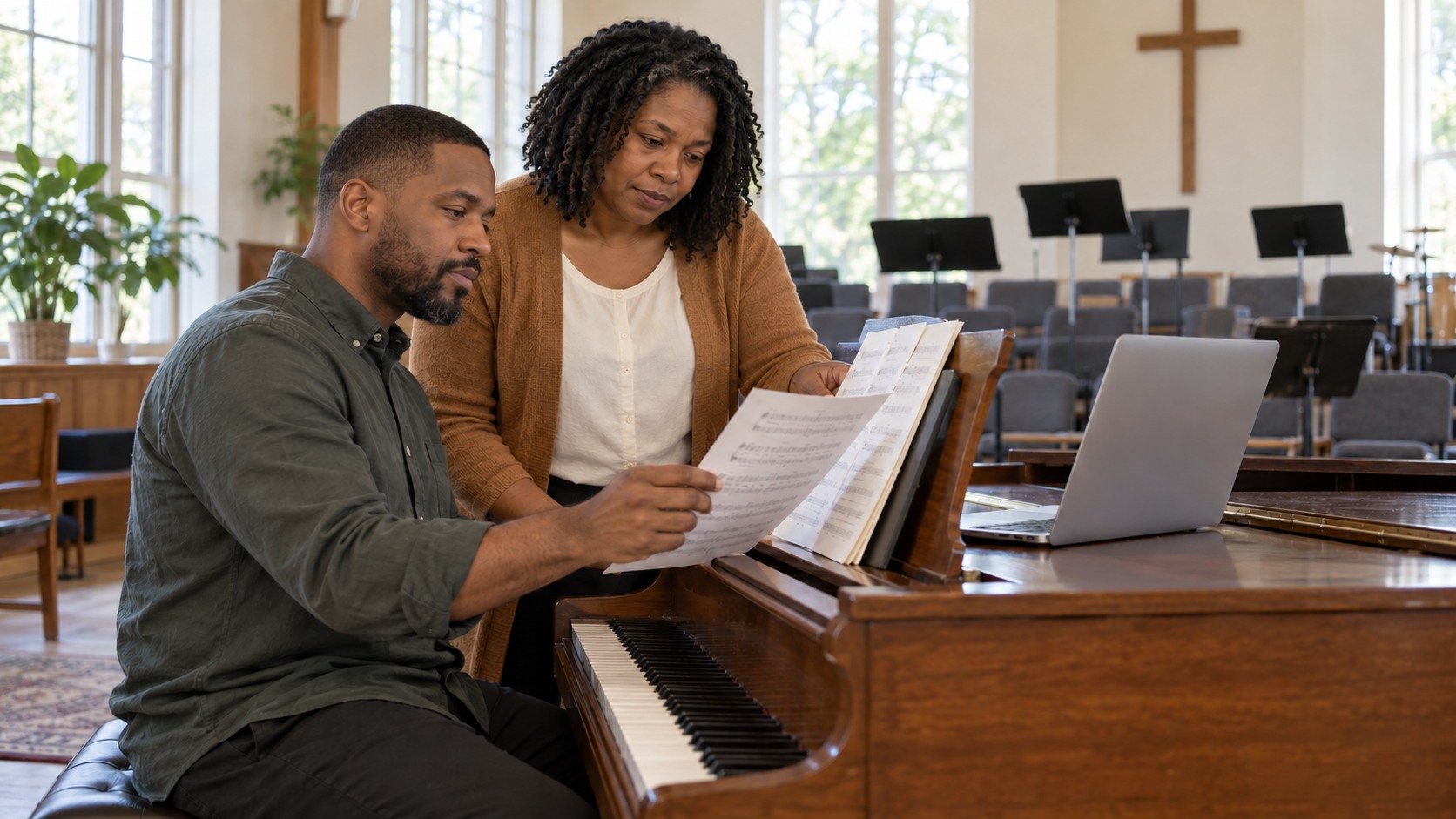
Worship leaders are using artificial intelligence to evaluate what congregations sing, bringing a question of spiritual responsibility into the practical work of choosing music. An October 2 Christianity Today report describes SongTheology, which scores lyrics, and Asaph, which helps organize worship sets. Source: christianitytoday.com
For pastors and musicians, the distinction matters. A generated score can look like an objective answer to a theological question. Before accepting it, a church needs to know whose criteria it represents, what evidence produced the result and which judgments remain outside the calculation. The immediate issue is not whether software can suggest a song, but how that suggestion becomes an accountable congregational choice.
Two tasks, and limits to the evidence
According to Kelsey Kramer McGinnis's reporting, Houston worship leader Tyler Anson Newberry developed SongTheology around seven criteria with a maximum score of 35. These include biblical grounding, doctrinal clarity and usefulness for congregational worship. She reports that both SongTheology and Asaph use Claude to apply criteria developed by their creators. Those accounts come from Christianity Today's reporting; AI Faith Monitor did not interview the developers or reproduce their evaluations. Source: christianitytoday.com
Asaph's own public documentation advertises an analysis of gaps in a church's song library, Scripture-related setlist suggestions and feedback from the worship team. It says users can change, replace or reorder suggestions and retain the final decision. Its analysis page also describes tracking thematic balance over time. These are the provider's descriptions of the service, not independently measured accuracy or evidence of improved spiritual formation. Source: asaph.io Source: asaph.io
AI Faith Monitor reviewed public documentation but did not operate either service; SongTheology’s page was unavailable.
Churches already have standards beyond a score
A useful comparison comes from the United Methodist Church's Discipleship Ministries. Its June 24, 2024 account of the CCLI Top 100 + Beyond project describes a ten-member team of pastors, theologians and worship practitioners. The project evaluates songs through Wesleyan theology, language for God and humanity, and performance practice. Its 2024 resource offered 64 songs for consideration. Source: umcdiscipleship.org
The project also deliberately looked beyond popular rankings, including underrepresented musicians and themes such as lament and justice. That is an identifiable editorial decision about what a congregation should encounter. It shows why a list of frequently used songs and a judgment about faithful worship are different kinds of information.
The comparison does not establish that a committee is always right or that software is always wrong. It establishes something more practical: a church can ask for a stated theological standpoint and an explanation of the selection process. An AI recommendation should be open to the same questions. If a church cannot explain why it accepted a song except that the application approved it, the decision remains inadequately explained.
What lyrics alone cannot settle
Older worship scholarship and practical guidance provide another check. A May 2024 Calvin Institute of Christian Worship article describes Methodist, Reformed and Lutheran approaches that consider theology alongside language, singability and musical performance. It encourages teams to discuss their criteria and attend to the people who will sing. Its account also shows how a song can be valued differently when local pastoral experience enters the discussion. Source: worship.calvin.edu
Brian Hehn, writing for the Center for Congregational Song, argues that theological interpretation must consider the act of singing and its setting as well as the printed words. His essay predates the present tools; it is background, not a review of either product. He asks leaders to listen to singers, their histories and the cultural and worship context in which music is used. Source: congregationalsong.org
These perspectives expose a question a numerical result cannot answer on its own: what information did the evaluator actually have? A lyric assessment may help a leader identify a phrase worth discussing. That does not establish whether a particular arrangement is accessible to this congregation, whether the words need explanation or whether a song belongs at this point in the service. Those require additional musical and pastoral judgments.
Christian perspective: the congregation is part of the judgment
Colossians 3:12–17 places singing within a shared life marked by compassion, patience, forgiveness, love and gratitude. Verse 16 connects music with teaching and admonishing one another. In that context, choosing songs is part of caring for and forming a community, rather than simply assembling religious content. The passage does not prescribe a software policy, but it gives Christians a reason to evaluate what their tools help people do together. Colossians 3:12-17 (NIV)
A worship team considering an AI recommendation can therefore begin with a modest, concrete practice: identify the relevant lyric and Scripture, read the explanation together, and record why the team accepts or rejects it. Then consider the congregation's ability to participate and the purpose of the whole service. This is a proposed practice, not a finding that any particular church already follows it.
A score may begin a useful conversation. It should not make that conversation unnecessary. The strongest measure of an assistant's usefulness is whether leaders can give a clearer, better-grounded account of their choices while retaining responsibility for the people who will sing them.
A useful trial would preserve room for disagreement. Ask team members to explain a recommendation they would change, and whether the tool’s explanation helped them identify the issue. That tests the usefulness of the discussion without mistaking agreement with the software for evidence of accuracy.