The starting point
In a March 23 article, Biblica presents AI as a tool that can serve Christian ministry, including work related to Bible access. The article is an institutional explanation of its outlook. Its positive theological language should not be mistaken for independent evidence that every AI-assisted translation or resource is accurate.
A hopeful phrase needs a precise object
A worthy goal does not settle the quality of the process used to pursue it. Translation must account for meaning, context and the people who will receive a text. A demonstration that reads smoothly in one language may conceal a serious error in another.
Readers should ask which stage uses AI, which sources are available to reviewers and how disagreements are resolved. This also helps distinguish translation, study commentary and a generated conversational response. They can appear together in one application while carrying very different evidential and institutional responsibilities.
“Redemptive AI” is a theological description of a hoped-for use, not a technical class of machine. In this setting the hope concerns access to Scripture. That distinction lets readers engage Biblica's argument fairly: a Christian organization can see a technology as serving its mission without claiming that the technology saves, believes or possesses spiritual wisdom. Readers should ask what is being redeemed, by whom, and in what sense the adjective is being used.
The phrase also deserves scrutiny because moral language can make an institutional proposal sound settled before its practical details have been examined. A translation tool may support a worthy purpose while remaining unreliable in a particular language or passage. Conversely, a flawed output does not prove that the purpose of widening access is insincere. Purpose, method and result need separate evaluation. Agreement with the mission should make quality control more demanding, because readers may rely on the resulting words in worship, teaching and private devotion.
Translation is an interpretive responsibility
Imagine an AI system suggesting a rendering of a biblical term that has several possible meanings. Choosing among them can depend on grammar, literary setting and the argument of the surrounding book. The most familiar modern meaning may not be the appropriate one. A fluent sentence can conceal that uncertainty, especially from a reviewer who knows the receiving language but cannot inspect the source-language reasoning. This is an illustration of a translation problem, not a reported error in Biblica's work.
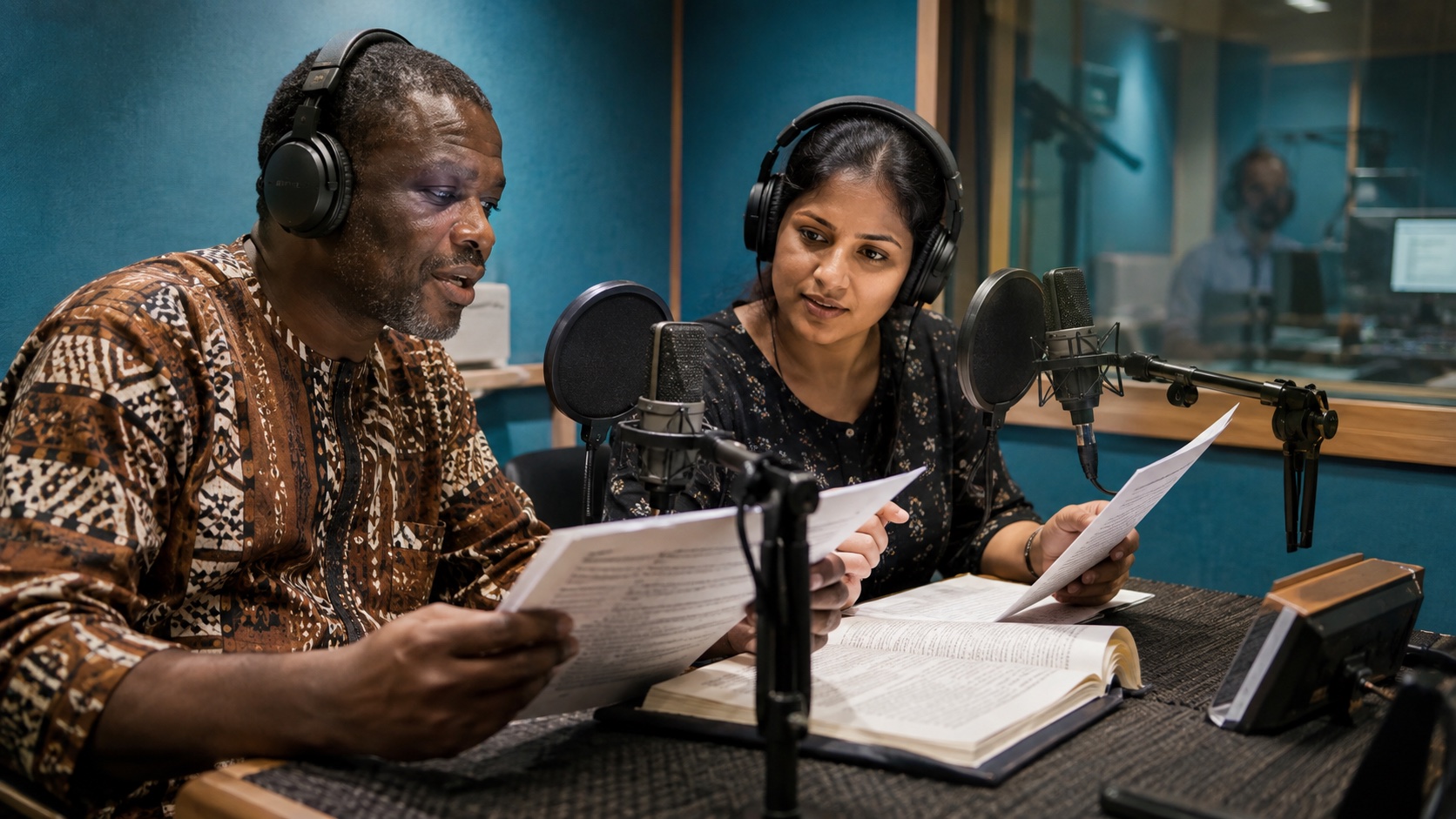
A responsible process therefore needs more than proofreading. Reviewers should be able to inspect disputed choices, compare the source text and record why a wording was selected. Speakers of the receiving language need to assess whether it communicates the intended meaning naturally. Theological reviewers can identify where a choice appears to settle an interpretive dispute without acknowledging it. These responsibilities may overlap, but none should disappear because a article arrives quickly.
Speed can be useful. It could free specialists to concentrate on difficult passages instead of repetitive formatting or terminology checks. That is a plausible benefit to evaluate, not a measured finding from the institutional article. The relevant comparison is not simply how many pages a system produces. It is whether the complete process delivers a more reliable and usable text, including review, revisions and the ability to correct an error after distribution.
Communities are participants, not merely recipients
Bible access is also a relationship with a community. A translation may be grammatically acceptable yet use words that sound insulting, obscure or associated with a different religious practice to its intended readers. Such possibilities make consultation essential. They cannot be resolved solely by a company's benchmark or a distant institution's confidence in its workflow.
For a church supporting a project, useful questions include who represents the receiving community, how disagreements are handled and whether local readers can challenge a translation choice. Consultation should begin while decisions remain open. Asking people to endorse a finished product is different from sharing responsibility for its development. An institution should explain that difference when describing its partnerships.
Digital access can also be uneven. A downloadable resource does not automatically reach people who have limited connectivity, limited literacy or no suitable device. Audio, print and face-to-face teaching may remain important. These are planning considerations rather than findings about the reach of this particular initiative. They help keep the discussion centered on people who need the text, rather than on the novelty of the production method.
What evidence would support a stronger claim?
An account of improved translation quality should identify the language, the task, the comparison and the reviewers. Were reviewers assessing readability, fidelity to the source or both? Did they know which articles used AI? How were disagreements resolved? A transparent study would also report difficult cases and remaining weaknesses. A favorable example alone cannot establish the reliability of a whole translation process.
An account of improved access needs different evidence: distribution, actual use, reader comprehension and barriers encountered. Downloads measure one kind of contact, not necessarily understanding. Testimonies can show how particular people benefited, but they should not be described as representative unless the selection process supports that claim. None of these distinctions invalidates testimony. They clarify what it can establish.
Biblica's article is useful evidence of its stated approach and Christian rationale. It is not, on its own, an independent evaluation of every translation produced with AI assistance. Readers can appreciate the rationale while asking for a separate account of review standards and results. That is responsible support, rather than suspicion of the institution's faith or motives.
Christian perspective: service must remain accountable
The Christian significance of Scripture makes care with its words especially important. In Acts 17:10–12, the Bereans examine the Scriptures in response to Paul's teaching. The passage concerns receiving and testing a proclamation; it does not prescribe a software workflow. As an illustration, however, it challenges the idea that the prestige of a messenger or the convenience of an interface should close the question of truth.
A church need not choose between gratitude for useful technology and careful examination. It can welcome assistance while insisting that people remain answerable for the text placed before readers. That answerability includes acknowledging uncertainty and correcting mistakes openly. Treating an AI-assisted resource as beyond criticism because it serves a Christian mission would confuse the mission's importance with the method's reliability.
Nor should criticism imply that traditional human processes are error-free. Human translators also disagree and make mistakes. The appropriate standard is a visible, competent process of judgment and correction, not an impossible promise of perfection. AI should be assessed within that process according to the work it actually performs.
Acts 2 portrays people hearing about God’s works in their own languages. Christians may reasonably find motivation there for making Scripture accessible across linguistic barriers. The passage does not validate any particular translation technology.
The ethical task is to join accessibility with fidelity and respect. Communities receiving a translation should not be treated merely as the final users of a process controlled elsewhere. Their linguistic knowledge and lived context matter to the work of communicating responsibly.
A decision a congregation can make now
Before funding or recommending an AI-assisted Bible resource, request a plain-language account of its review chain. Identify who checks the source languages, who checks the receiving language, who authorizes publication and how a reader reports a concern. Ask whether the organization distinguishes experimental material from an approved translation. Keep the answers with the resource recommendation so that future leaders can understand the decision.
This approach makes the debate practical. The question becomes whether a particular use helps people encounter a trustworthy text, with accountable human care around it. “Redemptive” can name a Christian hope for that work. It cannot substitute for evidence that the work has been done well.
Ask who reviews the language, how mistakes can be reported and whether a user can distinguish the Bible text from generated commentary. Evaluate claimed improvements using examples that competent speakers can inspect.