FAITH. TECHNOLOGY. PUBLIC ACCOUNTABILITY.
Research library

News brief

Erfurt conference puts AI religious images under scholarly scrutiny

The September 28–30 programme examines images, authority and religious imagination across traditions. A programme establishes the questions being studied, not the answers.

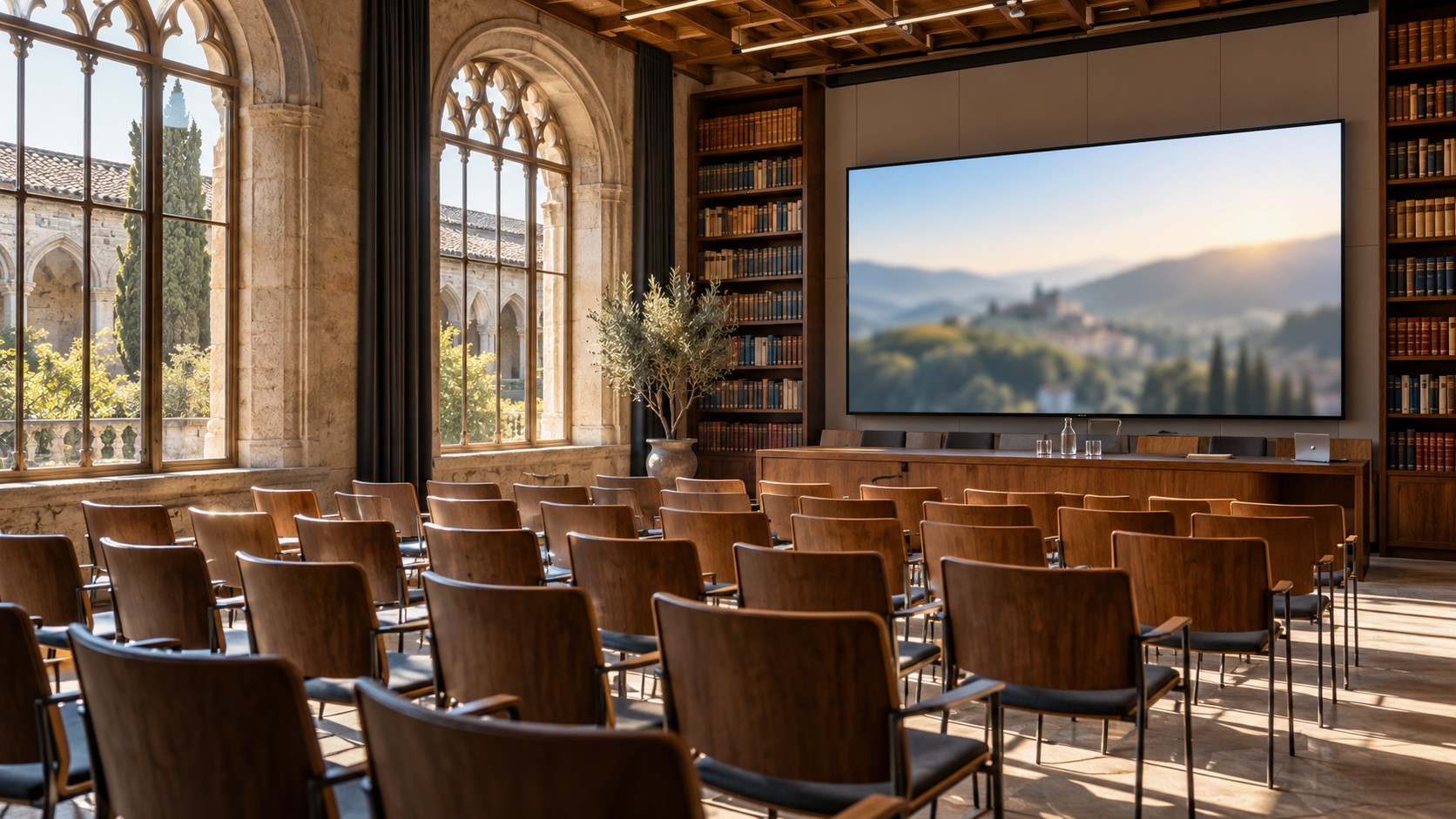
Imagined university seminar room prepared for discussion.
Editorial illustration
AI Faith Monitor

Published 2026-09-29 · 2 min read · AI-assisted reporting

Scheduled event: September 28–30, 2026 · Source checked 2026-09-29

A current research gathering

The University of Erfurt’s programme for God, Human, Machine places AI-generated religious imagery at the center of a conference scheduled for September 28–30, 2026. Its agenda includes image creators, scholars and discussions of how visual media influence religious imagination. Topics span Christian, Muslim, Hindu, Jewish and other religious contexts. The source is the organizer’s programme, not our observation of the proceedings.

Tuesday’s schedule includes religious authority in online imagery, a discussion associated with The Jewish Dataset, and immersive demonstrations. Wednesday’s programme includes images of paradise and hell and AI in accounts of religious futures. These entries establish the subjects proposed for discussion. They do not establish agreement among speakers or demonstrate how audiences respond.

Why an image can make a claim without a caption

A realistic scene can invite viewers to believe that someone witnessed an event. In a religious setting, that impression may concern a miracle, an apparition, a historical encounter or a contemporary act of worship. The ethical question is not exhausted by whether the picture is beautiful. Readers need to know whether it depicts documented events, reconstructs a historical possibility, or imagines something that never happened.

For an educator, a useful exercise is to ask students to describe what an image appears to prove before revealing its provenance. Then compare that initial impression with the evidence available. This is a proposed teaching method, not a result reported from Erfurt. It draws attention to the distance between visual confidence and historical knowledge.

Christian perspective: imagination with truthful boundaries

Christian art has room for imagination, but imaginative devotion and factual testimony have different responsibilities. A scene made for reflection should not acquire the authority of eyewitness evidence merely because its lighting and faces look photographic. In Ephesians 4:25, truthful speech belongs to a community whose members are responsible to one another. That principle can inform visual communication as well as words. Ephesians 4:25 (NIV)

Different religious communities also disagree about sacred representation. A Christian publication should explain those differences carefully rather than assume one rule governs everyone. The immediate value of this conference programme is the range of questions it makes visible. Any later report of findings should identify the actual paper, speaker or recording and preserve the distinction between an individual argument and a tradition’s teaching.

Sources & method

University of Erfurt: God, Human, Machine conference programme

What this article establishes

Based on the university’s published programme. No attendance, delivered remarks or conference findings are claimed. September 28–30 are scheduled event dates; the page’s publication date is not specified.

How we use AI · Evidence standards

Related reading

AI-generated illustration of blank magazine proofs on a drying rack beside folded journals and a paper-cutting machine in an imagined print room.
Editorial illustration

News brief / Media & imagery

Catholic media’s AI pledge debate separates writing rules from research checks

Catholic Culture’s new pledge and a response from Crisis identify different boundaries for assistance, corroboration and editorial responsibility.

Published 2026-10-09 · Pledge October 7; clarification and Crisis response October 8, 2026; submission rules checked October 9
AI-generated imagined radio studio with a microphone, paper script and audio console on a wooden desk.
Editorial illustration

News brief / Media & imagery

Haven’s new AI series sits alongside its pledge to keep content human-made

The broadcaster’s current program addresses Christian responses to AI. Its public production commitment gives listeners a separate question to ask about how religious media are made.

Published 2026-10-07 · Episodes October 5–7, 2026 · Production statement on a March 16-dated page; adoption date unverified