
FAITH. TECHNOLOGY. PUBLIC ACCOUNTABILITY.
Research library

News brief

Lambeth conference asks what faith communities can contribute to citizen AI literacy

A November 16–17 programme proposes a policy brief on technological literacy and human agency. Its recommendations have yet to be developed.

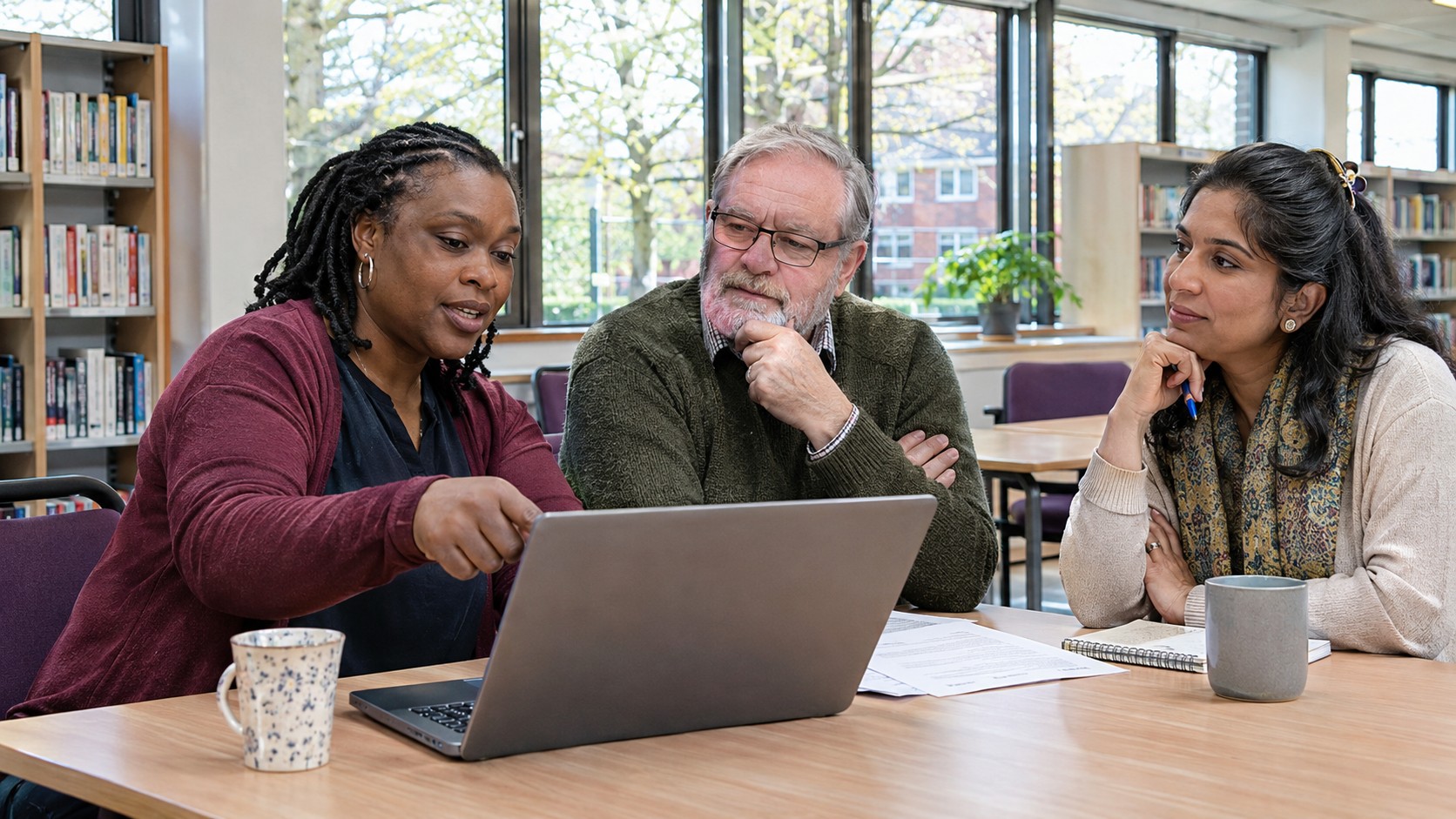
AI-generated illustration: Three imagined adults compare laptop information with papers in a bright library community room.
Editorial illustration
AI Faith Monitor

Published 2026-11-13 · 2 min read · AI-assisted reporting

Event November 16–17, 2026; programme publication date not stated; checked November 13, 2026 · Source checked 2026-11-13

A policy brief still to be written

A conference at Lambeth Palace on November 16–17 will ask what faith communities can contribute to citizens’ technological literacy and ability to make their own choices. The University of Bath ART-AI programme proposes a second-day workshop to develop a policy brief with delivery recommendations. Registration has closed.

The event, AI, Ethics and Faith after Magnifica Humanitas, places discussion of Pope Leo XIV’s encyclical alongside an interfaith programme. The organisers describe intended alignment with the G20 Interfaith20 2026 recommendations and the UK’s Roadmap for Modern Digital Government. That is their stated ambition, not evidence of government endorsement or an adopted policy. Source: cdt-art-ai.ac.uk

Bath’s account of its January 20 gathering records an earlier meeting at Lambeth Palace involving Christian, Jewish and Muslim perspectives. The November workshop continues that conversation with a more specific proposed output: recommendations about citizens’ capabilities. Source: cdt-art-ai.ac.uk

Literacy includes deciding when to stop

The relevant Christian context is educational, not simply technological. In paragraph 140 of Magnifica Humanitas, dated May 15, Leo describes education as patient engagement with reality and says learning about AI includes deciding when and for what purposes it should not be used. The surrounding discussion connects education with seeking truth and sustaining judgment. These are the encyclical’s principles, not findings from a tested literacy course. Source: vatican.va

For faith-community educators, that distinction suggests a useful question: can a participant act independently after the demonstration ends? Knowing how to ask a chatbot for information is one skill. Knowing where to verify its answer, and when to seek a person instead, is another.

A contribution communities could make

Consider a hypothetical community workshop on finding a local public service. Participants could compare an AI-generated explanation with the service’s own current information, identify missing details and locate a human contact. The aim would be to practise finding a reliable route forward, without entering anyone’s personal circumstances into a chatbot.

A church or interfaith learning group could record which steps participants found difficult and what assistance they needed. That would give a policy discussion something more concrete than a general call for awareness: examples of the capabilities a course should teach and the barriers its delivery must address. This is AI Faith Monitor’s suggested exercise, not a conference recommendation or a claim that volunteers can replace specialist advice.

The programme page does not state a publication date; November 13 is this report’s verification date. This advance brief draws on published materials, not attendance, interviews or a completed policy brief. Whether the workshop produces usable recommendations remains unestablished.

Sources & method

University of Bath ART-AI: AI, Ethics and Faith after Magnifica Humanitas

What this article establishes

Advance coverage from the organiser’s programme, its January event account and the relevant educational passage of Magnifica Humanitas. No attendance, interviews or completed policy brief. The suggested workshop exercise is editorial application, not an adopted recommendation. Produced with AI assistance under human editorial direction. The editor shapes the coverage and takes responsibility for the final published content. AI-generated illustration of an imagined citizen AI-literacy workshop, not the conference, its venue or participants.

How we use AI · Evidence standards

Related reading

An imagined Jewish educator workshop table with game pieces, planning cards, a notebook and laptop.
Editorial illustration

News brief / Faith & religious life

Jewish Futures program puts AI, games and educators’ choices on the same agenda

The October 26 program connects AI possibilities with learning design and educators’ decisions. This is advance coverage, not a report of classroom outcomes.

Published 2026-10-23 · Upcoming event October 26, 2026; organizer program checked October 23; page publication date not stated


An imagined church meeting room with an empty round table, laptop and notebooks.
Editorial illustration

News brief / Faith & religious life

Anglican AI policy work includes Indigenous knowledge and workers

An October progress report follows an August mandate in Aotearoa, New Zealand and Polynesia. The work is beginning, not a finished AI policy.

Published 2026-10-23 · Progress report October 20, 2026; adopted motion August 20; initial online meeting described as the preceding week, exact date not stated

An imagined English parish room with empty chairs, a laptop, notebooks and a church newsletter.
Editorial illustration

News brief / Faith & religious life

England ecumenical report puts quiet church AI adoption on the agenda

An October 22 account asks churches to discuss AI before its use becomes routine, pointing to existing guidance rather than announcing a new policy.

Published 2026-10-23 · Meeting report October 22, 2026; meeting described only as October; AICP guidelines launched July 14, 2026; current PDF revision date not established