
FAITH. TECHNOLOGY. PUBLIC ACCOUNTABILITY.
Research library

News brief

Natalie Grant’s AI warning puts worship leadership ahead of effortless production

The singer’s recent comments raise a concrete question for churches: who takes responsibility for the faith expressed in generated music?

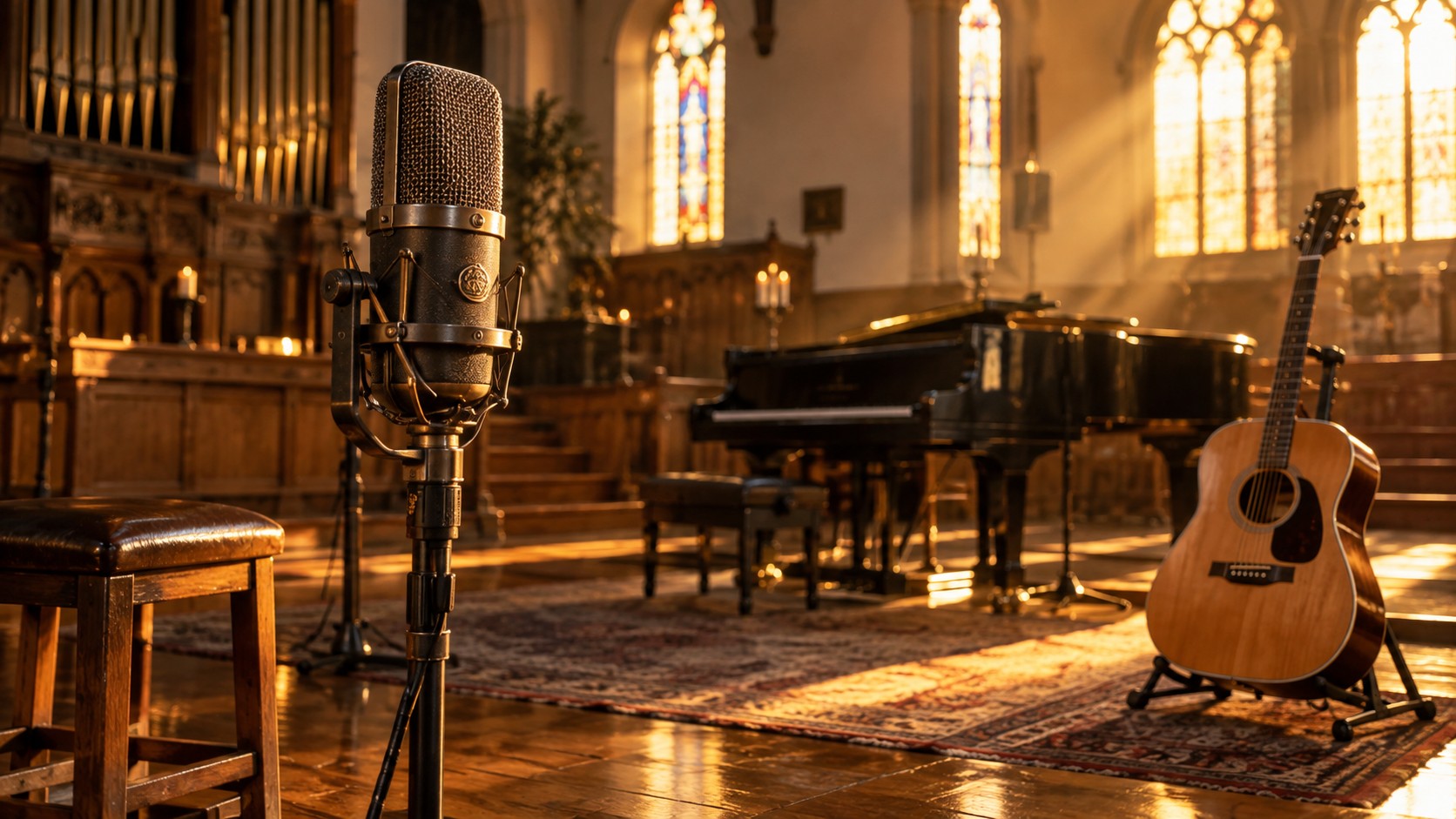
Imagined church rehearsal room; not a photograph of Natalie Grant or her church.
Editorial illustration
AI Faith Monitor

Published 2026-09-29 · 2 min read · AI-assisted reporting

Source / event date: 2026-09-26 · Source checked 2026-09-29

An artist’s warning about spiritual formation

Natalie Grant has urged churches to direct how AI is used rather than allow it to shape their spiritual direction, according to Leonardo Blair’s September 26 report in The Christian Post. Reporting her appearance on The Kent Ingle Podcast, Blair describes a position that allows for responsible assistance while warning about generated material influencing people’s relationship with Jesus. Grant also anticipated stronger demand for live performance; that is her expectation, not an established market outcome. Source: christianpost.com

A good sound is only one part of a worship decision

A congregation does more than hear a song. It learns words, repeats them with other people and may carry them into prayer, grief and celebration. For that reason, a worship leader’s assessment cannot stop at whether the production sounds convincing. A generated lyric needs the same theological attention as any proposed song.

Consider a hypothetical chorus promising that faithful people will never suffer. Its musical quality would not resolve the pastoral problem. A grieving worshipper could hear the words as a judgment on their faith. The responsible task is to examine the claim, its relation to Scripture and the context in which it will be sung.

Authorship and permission are separate questions. A song can contain sound theology while raising unresolved questions about the permission to imitate a voice or the accuracy of its credits. This brief does not accuse any particular song or service of misconduct. It identifies decisions a church should make before presenting material to its congregation.

Christian perspective: songs teach a community

Colossians 3:16 connects singing with teaching and mutual admonition as Christ’s message takes root among believers. The passage is not a judgment about a modern production tool. It explains why a church should care about what its songs form people to believe and practice. Colossians 3:16 (NIV)

A useful review would name the person responsible for the words, ask how the material serves this congregation and make clear which parts were generated or adapted when that knowledge is relevant to trust. Technology can assist preparation; it cannot assume the leader’s responsibility to the people singing.

Grant’s comments are one artist’s contribution, not a survey of Christian musicians or proof that every church shares her judgment. Their strongest practical challenge is nevertheless clear: the ability to produce more content should serve the community’s worship, rather than become the measure by which worship is judged.

Sources & method

The Christian Post: Natalie Grant warns Church on use of AI to shape spirituality

What this article establishes

The Christian Post’s September 26 report inspected. Comments are attributed through that report; no claim of independently transcribing the full podcast, measuring public opinion or predicting music-industry outcomes.

How we use AI · Evidence standards

Related reading

AI-generated illustration of blank magazine proofs on a drying rack beside folded journals and a paper-cutting machine in an imagined print room.
Editorial illustration

News brief / Media & imagery

Catholic media’s AI pledge debate separates writing rules from research checks

Catholic Culture’s new pledge and a response from Crisis identify different boundaries for assistance, corroboration and editorial responsibility.

Published 2026-10-09 · Pledge October 7; clarification and Crisis response October 8, 2026; submission rules checked October 9

AI-generated imagined radio studio with a microphone, paper script and audio console on a wooden desk.
Editorial illustration

News brief / Media & imagery

Haven’s new AI series sits alongside its pledge to keep content human-made

The broadcaster’s current program addresses Christian responses to AI. Its public production commitment gives listeners a separate question to ask about how religious media are made.

Published 2026-10-07 · Episodes October 5–7, 2026 · Production statement on a March 16-dated page; adoption date unverified