
FAITH. TECHNOLOGY. PUBLIC ACCOUNTABILITY.
Research library

News brief

Newbold conference asks what religious freedom means when AI can infer belief

A November 11–12 programme puts conscience and religious data on the agenda, giving faith communities questions to ask before adopting new systems.

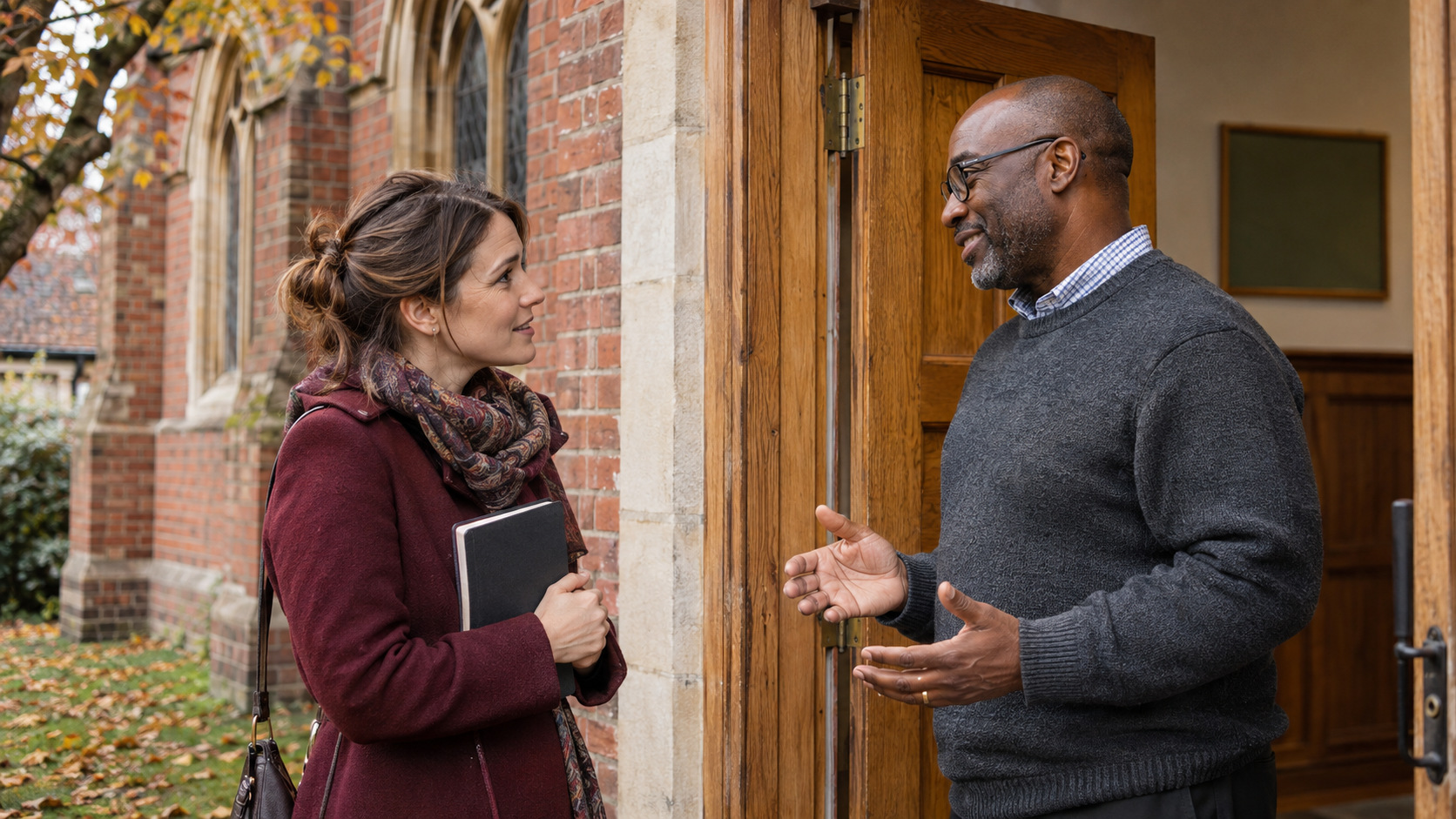
AI-generated illustration of a woman holding a notebook and speaking with a man at an imagined church doorway.
Editorial illustration
AI Faith Monitor

Published 2026-11-10 · 2 min read · AI-assisted reporting

Conference scheduled November 11–12, 2026; organiser announcement and programme checked November 10; preview, not a report of proceedings · Source checked 2026-11-10

Religious freedom before the conference

Newbold College of Higher Education is scheduled to host the International Religious Liberty Association’s Fides et Libertas conference on November 11–12 in Binfield, England. Its focus is religious freedom amid emerging technologies. For churches considering AI tools, the practical issue reaches beyond whether a system produces sound religious answers: what could it learn about the people using it? Source: newbold.ac.uk

The public conference follows a separate IRLA experts meeting scheduled for November 9–10. The programme includes discussions of conscience, religious identity and technology governance. These are announced subjects, not evidence that participants have agreed on findings or adopted a policy. Source: irla.org

The organisers’ concept notes distinguish information people explicitly provide from religious beliefs inferred through their digital behaviour. They also examine how surveillance may discourage religious expression and how recommendation systems can affect the visibility of religious perspectives. The document presents these as problems for investigation, not as measurements of a particular product’s effects. Source: irla.org

Questions for a congregation’s own tools

That distinction matters in a congregation’s own purchasing decisions. Consider a hypothetical study app that recommends material from a person’s reading history. A helpful recommendation and a sensitive inference can arise from the same activity. Church leaders should therefore ask what the supplier records, what conclusions it draws, who receives those conclusions and whether the person can challenge or remove them. These are editorial questions prompted by the agenda, not recommendations already issued by the conference.

A useful review would begin with one actual workflow rather than a general declaration that the church supports responsible AI. Who introduces the tool? What does a newcomer understand about its use? Can someone choose a human conversation without having to explain their refusal? Which named person will investigate a complaint?

For a Christian community, treating people as neighbours means taking those choices seriously, including when the person’s beliefs are uncertain or different from those of the institution. Pastoral concern should not become a reason to make someone more observable than they expected. This is a Christian ethical application, not a claim about the speakers’ conclusions.

Check arrangements before attending

Newbold lists free admission with advance registration and limited places. Prospective attendees should confirm arrangements directly: its overview and the detailed programme differ on session hours. This report establishes the published agenda only; it does not report attendance, proceedings or outcomes. Source: newbold.ac.uk

Sources & method

Newbold and IRLA: conference announcement and programme

What this article establishes

Review of organiser announcement and programme, not conference attendance or findings. Hypothetical examples and Christian applications are editorial reasoning, not speaker conclusions. Organiser sources are not independent corroboration. Produced with AI assistance under human editorial direction. The editor shapes the coverage and takes responsibility for the final published content. AI-generated imagined welcome at a church doorway; not Newbold College, conference participants or an actual event.

How we use AI · Evidence standards

Related reading

An imagined Jewish educator workshop table with game pieces, planning cards, a notebook and laptop.
Editorial illustration

News brief / Faith & religious life

Jewish Futures program puts AI, games and educators’ choices on the same agenda

The October 26 program connects AI possibilities with learning design and educators’ decisions. This is advance coverage, not a report of classroom outcomes.

Published 2026-10-23 · Upcoming event October 26, 2026; organizer program checked October 23; page publication date not stated


An imagined church meeting room with an empty round table, laptop and notebooks.
Editorial illustration

News brief / Faith & religious life

Anglican AI policy work includes Indigenous knowledge and workers

An October progress report follows an August mandate in Aotearoa, New Zealand and Polynesia. The work is beginning, not a finished AI policy.

Published 2026-10-23 · Progress report October 20, 2026; adopted motion August 20; initial online meeting described as the preceding week, exact date not stated

An imagined English parish room with empty chairs, a laptop, notebooks and a church newsletter.
Editorial illustration

News brief / Faith & religious life

England ecumenical report puts quiet church AI adoption on the agenda

An October 22 account asks churches to discuss AI before its use becomes routine, pointing to existing guidance rather than announcing a new policy.

Published 2026-10-23 · Meeting report October 22, 2026; meeting described only as October; AICP guidelines launched July 14, 2026; current PDF revision date not established