A discovery can matter without settling everything
Christians should welcome tools that help scholars study ancient manuscripts, including AI. We should also resist making those tools carry the weight of our faith. A model that helps date handwriting can enrich our understanding of the biblical world. Treating its output as a verdict on divine inspiration asks it to answer a question it was never built to investigate.
The occasion for this reflection is historical: the Enoch manuscript-dating study published in PLOS ONE on June 4, 2025. This is an October 2026 opinion about how Christians receive such research, not an announcement of a new discovery. Source: journals.plos.org
The argument here is that churches should cultivate interest in the evidence while refusing to turn provisional findings into apologetic trophies. That refusal is a form of fidelity. When a congregation is taught exactly what a study establishes, it can appreciate a genuine advance without having to defend every subsequent interpretation of it. Responsible enthusiasm leaves room to learn more.
Read the method before celebrating the result
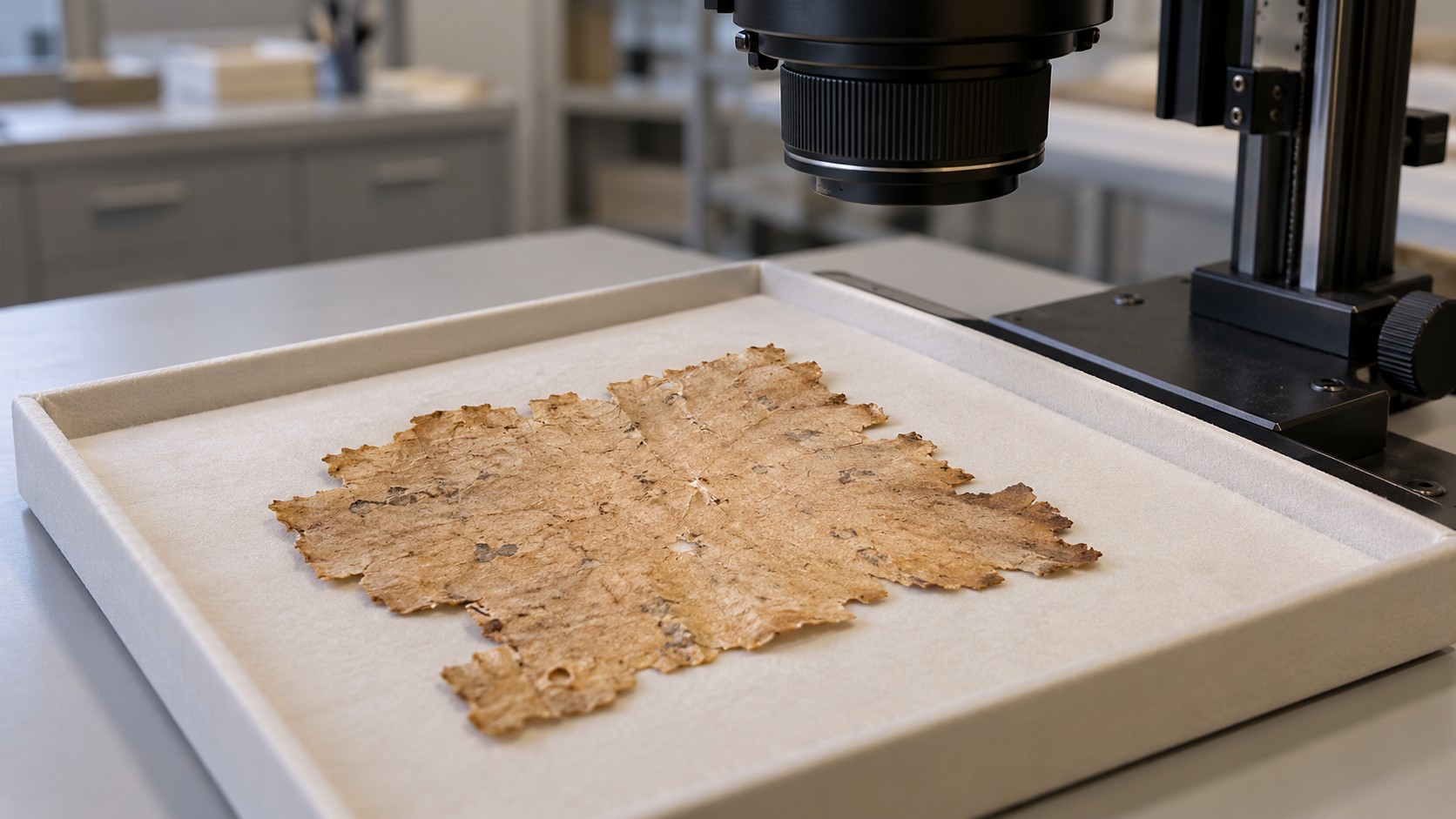
Enoch used handwriting-shape features and Bayesian ridge regression, trained on 24 radiocarbon-dated manuscripts, to estimate date distributions. For 135 further manuscripts, the paper's palaeographers judged 107 predictions, about 79 percent, realistic. That assessment was not independent verification against known writing dates. The training also used palaeographic knowledge to select between parts of bimodal radiocarbon distributions. The researchers reported dates frequently earlier than traditional estimates. These are reported research results, not an audit conducted by this publication. Source: journals.plos.org
There is a prior distinction worth teaching. The University of Hamburg's manuscript guide explains that radiocarbon dating measures organic material and relates its age to the organism's death; it also warns about contamination. For parchment, that concerns the animal skin. Establishing when someone wrote on it requires a further historical inference. Establishing when the work was first composed requires another. Source: csmc.uni-hamburg.de
An everyday analogy helps. Finding a dated printing of a novel tells us something about its circulation, but the printing date alone cannot identify the author's first article. The distances between those events matter. Precision about the surviving object must not silently become certainty about everything that preceded it.
Take both excitement and criticism seriously
Independent scholarly responses offer a better example than a victory headline. In interviews published by the Biblical Archaeology Society on June 20, 2025, Christopher Rollston argued that much of the study overlapped with earlier palaeographic scholarship. Jonathan Ben-Dov welcomed attention to evidence that might otherwise be missed, while questioning whether the work justified a wholesale chronological reordering. Yonatan Adler welcomed the attempt to obtain new data and warned against dismissing findings simply because they challenged familiar dates. These were different scholars' assessments, rather than a consensus vote. Source: biblicalarchaeology.org
A church reader need not choose a winning expert before recognizing the value of this disagreement. One question concerns the reliability of an estimate; another concerns how much it changes an established historical account. Evidence can be useful even when its novelty is overstated. A challenge to an older account can deserve examination without already having replaced it.
The right response is patient comparison: Which objection addresses the actual method? Which conclusion depends on an assumption about the history of the text? What evidence would distinguish the alternatives? A Christian commitment to truth should make those questions welcome, including when they complicate an attractive sermon illustration.
Remember whose history is being studied
The Israel Antiquities Authority's introduction places the Qumran scrolls within Jewish religious life in the Second Temple period. The collection includes biblical manuscripts alongside other writings, including prayers, interpretation and community regulations. Its account also describes both substantial similarities and differences between biblical manuscripts and the later Masoretic textual tradition. This is a complex surviving record, not a single uniform book waiting to be given a machine-certified birthday. Source: deadseascrolls.org.il
For Christian teachers, that context carries an ethical obligation. These writings deserve attention as evidence of Jewish lives and practices, not merely as exhibits recruited for a Christian argument. Respect begins with describing what an object is before explaining how it bears on our theology.
It also gives churches something richer to teach. Students can learn why comparing copies matters, why a fragment can answer one question while leaving another open, and why preservation is worthwhile even when no dramatic conclusion follows. Knowledge of the people who copied and treasured these texts has value beyond the immediate usefulness of a headline.
The strongest objection deserves an answer
A fair objection is that this caution could become a way of insulating Christian belief from historical evidence. Christianity makes claims about what happened. If evidence could strengthen or weaken a particular historical argument, why tell believers not to connect scholarship with faith?
That objection identifies a real danger. Christians should not invoke uncertainty only when a finding is inconvenient, then abandon it when a result appears favorable. An earlier manuscript can constrain a theory that requires its contents to have originated later, provided the dating and identification are sound. Historical claims must remain answerable to the relevant evidence.
Paul's argument in 1 Corinthians 15:1–19 makes the point forcefully. Addressing denial of resurrection among the Corinthians, he recalls the message about Christ's death, burial, resurrection and appearances. He insists that the truth of the resurrection matters to the truth of Christian preaching. The passage does not present faith as indifferent to reality. 1 Corinthians 15:1-19 (NIV)
But that is precisely why the claim and the evidence must match. A date assigned to one surviving manuscript cannot by itself establish that every event described in a biblical book happened, that a named person composed it, or that its words were divinely inspired. Recognizing that limit does not dismiss historical inquiry. It protects inquiry from a conclusion larger than its evidence.
Christians who approach questions of authorship and inspiration differently should still be able to ask what each particular measurement establishes. The argument here does not require settling those theological disagreements first.
Truthfulness belongs inside Christian witness
Luke 1:1–4 offers a positive model for that posture. The Gospel's opening addresses Theophilus, mentions accounts already circulating and traditions handed down by eyewitnesses, and explains the writer's investigation and orderly presentation. This is an ancient preface, not a blueprint for computational research. Yet Christians can reasonably see in it a connection between careful inquiry and the reader's confidence. Luke 1:1-4 (NIV)
Applied to a church classroom, that means showing the route from evidence to conclusion. A learner should be able to ask how we know something without being treated as disloyal. Explaining a limitation can strengthen trust because it demonstrates that the teacher distinguishes conviction from an attractive claim that has not been established.
In 2 Corinthians 4:1–6, Paul describes the character of his ministry, rejecting deception and distortion while directing attention to Christ. The context concerns proclaiming the gospel, rather than assessing an algorithm. A Christian application is that a persuasive religious purpose does not excuse an inaccurate account of research. There is no faithful shortcut through an exaggerated statistic. 2 Corinthians 4:1-6 (NIV)
Imagine a teacher using a hypothetical headline claiming that AI has proved the Bible true. Asking students to identify the missing steps could become a valuable lesson in Christian honesty. The lesson should include the teacher's willingness to correct earlier claims, not just the students' ability to criticize someone else's.
What teachers and preachers should do next
Before using manuscript research in a sermon or lesson, write two sentences: what the study measured, and what you are asking the congregation to conclude. If the second sentence travels beyond the first, identify the additional historical or theological argument instead of allowing excitement to bridge the gap.
Show the original publication date. Preserve the distinction between an estimated range and an exact year. Tell listeners whether an assessment comes from the research team, an outside scholar or your own interpretation. If a compelling claim depends on a technical dispute you cannot explain accurately, leave it out until you can.
Then make room for genuine appreciation. Research into ancient texts can help a congregation become more curious about history and more grateful for the labor of scholars and conservators. Those are worthwhile outcomes without declaring that a machine has confirmed a creed.
The measure of a good church lesson is not how decisively it appears to end an argument. It is whether people leave better equipped to tell the truth. Christians can welcome Enoch's contribution on those terms, with interest in its findings and freedom to acknowledge their limits.