When a beautiful image becomes a factual claim
Imagine an image of a pastor kneeling beside a flooded church. The light is convincing, the clothing looks natural, and the building resembles a real place. As an illustration of service, it might express something meaningful. Under a headline about a named congregation's flood response, however, the same image could lead readers to believe that the scene occurred. That imagined example exposes an editorial responsibility: the meaning of a picture depends partly on how a publisher presents it.
Religious publishers have good reasons to value visual storytelling. Art can make an abstract question approachable and help a reader pause over a difficult subject. But emotional force does not turn an invented scene into evidence. A newsroom must preserve the difference even when the illustration expresses values the newsroom sincerely supports.
Our position is that realism increases the need for context. The more readily a reader could mistake a picture for documentation, the more carefully its caption, placement and relationship to the headline should explain what it represents. Attractive design and truthful presentation should reinforce each other.
A contemporary Christian intervention
Pope Leo XIV's message for the 2026 World Communications Day addresses the protection of human voices and faces in a changing media environment. It calls for responsibility, cooperation and education, including transparency about synthetic content. This is a Catholic contribution to the debate, not evidence that all Christians agree about religious art or media policy. The original message is available here: Source: press.vatican.va
The practical question extends beyond denominational boundaries. A reader of any faith should be able to distinguish an observed event, an artistic reconstruction and a symbolic illustration. Our argument concerns that distinction; it does not ask a reader to accept papal authority before judging whether a caption is accurate.
Three pictures, three different promises
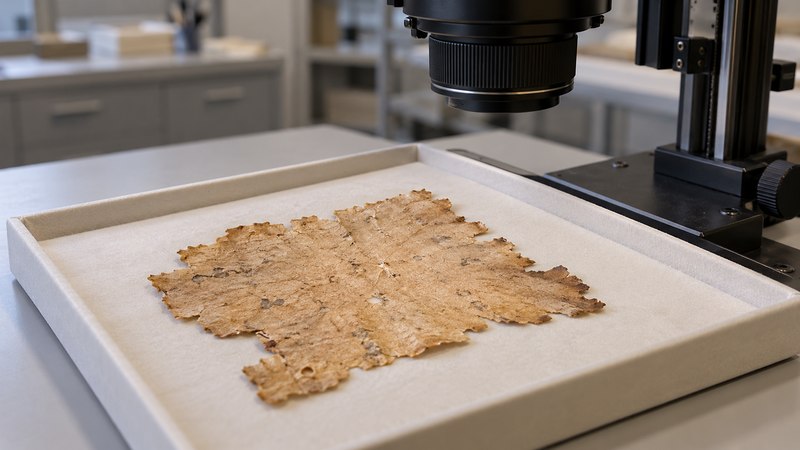
A documentary photograph is offered as a record of something placed before a camera. That claim still needs scrutiny: selection, cropping and captioning can mislead. A publisher should know the photograph's source and what it actually depicts rather than assume that a photographic appearance settles the matter.
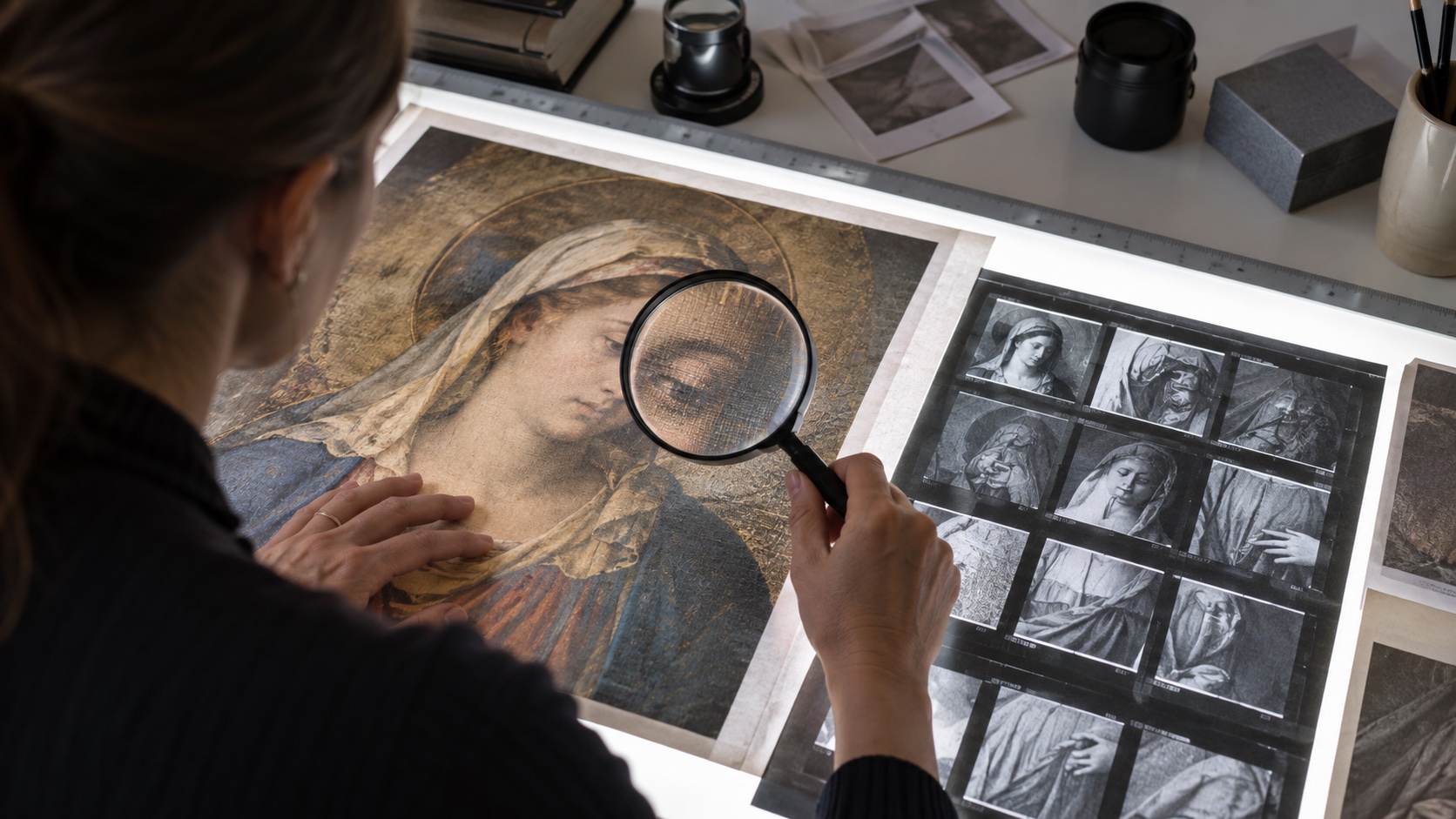
A historical reconstruction makes a different promise. It attempts to imagine a setting using evidence and artistic judgment. Some details may be informed by scholarship while others are necessarily conjectural. A responsible presentation identifies the reconstruction and avoids suggesting that uncertain details have been recovered with photographic precision.
A conceptual illustration has a third purpose. It can use objects, landscapes or fictional scenes to explore a question rather than report an occurrence. An empty chair beside a screen might illustrate a discussion of presence and pastoral care. The image need not pretend to show an actual counseling session to be emotionally or intellectually useful.
Confusion arises when the caption offers one kind of promise while the placement implies another. “Illustration” hidden far below a realistic picture of a named person may not correct the first impression. The complete presentation should make sense to a reader who arrives through a search result or sees a shared card without the full article.
Christian perspective: truthful witness includes presentation
Exodus 20:16 forbids bearing false witness against a neighbor. Its direct concern is not a modern image-editing technique. The moral application here is the obligation not to misrepresent another person through a story we tell about them. Read the commandment in its setting: Exodus 20 (NIV)
That principle reaches beyond the question of whether every sentence is literally defensible. A publisher can combine true words with an invented picture in a way that creates a false overall impression. Christian concern for truth should ask what the audience is reasonably being led to believe, especially when the depicted person cannot challenge the portrayal.
There is also a question of neighbor-love in the choice of subjects. A fictional image of anonymous worshippers should not become a substitute for learning what a real community says about itself. Visual dignity involves more than attractive faces. It includes resisting the temptation to turn people into convenient symbols of ignorance, fear, holiness or technological progress.
Art is not the enemy of truth
A reasonable objection is that religious art has never been limited to literal reportage. Paintings, drama and other forms of storytelling can communicate meaning without claiming to be eyewitness records. A demand that every image function as documentation would impoverish the publication and misunderstand art.
That objection is sound. The answer is to preserve the freedom of illustration while making its purpose clear. A symbolic picture can invite reflection without making a claim about a real person's actions. A biblical scene can be identified as an artistic interpretation without losing its ability to prompt study. Transparency is a way of helping the audience receive the work in the right register.
Nor should a caption become a technical essay that overwhelms the picture. A concise description such as “Conceptual illustration of technology and pastoral presence; no actual counseling session is depicted” can explain the relationship to the article. Where the production method is relevant to understanding authenticity, the accompanying image information should identify it accurately. Brevity should not depend on concealment.
The risk is editorial, not only technological
Consider two hypothetical errors. In the first, a realistic image of an imaginary robot is used beside an article about a company's product without explaining that it is not the product. In the second, a picture of a real religious leader is altered so that the leader appears to endorse that product. Both can mislead, but the second also attributes an action to an identifiable person.
A useful review therefore begins with the claim implied by the scene. Does the image suggest that a person attended an event, used a device, blessed a company or expressed an emotion? What evidence supports that suggestion? If the answer is only that the scene looks plausible, the newsroom should redesign the illustration rather than let realism do the work of an unsupported allegation.
The same discipline applies to flattering imagery. Fabricating an endorsement is not made acceptable by assuming that the depicted leader would probably approve. A publisher should not manufacture a testimony for a cause it considers good.
A workable visual policy for religious publishers
Keep a record for each published image: origin, creator or production method, relevant permissions, intended use and caption. Review the image with its headline rather than approving the asset in isolation. Someone should check that the caption survives the site's mobile layout and that a social crop does not remove context essential to understanding it.
For a report about an actual announcement, prefer a verifiable event or product image when appropriate rights and context are available. If an illustration is needed, choose a composition that supports the subject without pretending to document the announcement. Unique artwork can make an article distinctive; uniqueness alone does not establish accuracy.
Finally, make correction possible. If readers reasonably misunderstand a picture, examine the presentation instead of dismissing their confusion. Replace an unsuitable image, clarify the caption and explain a material correction when needed. The goal is not to defend the newsroom's intention at all costs. It is to restore an accurate understanding.
Religious media ask audiences to take truth seriously. Their visual choices should make that commitment visible. A compelling image earns its place when it helps readers understand the article and leaves them with a truthful account of what they have actually seen.