A church forum before the next planning decisions
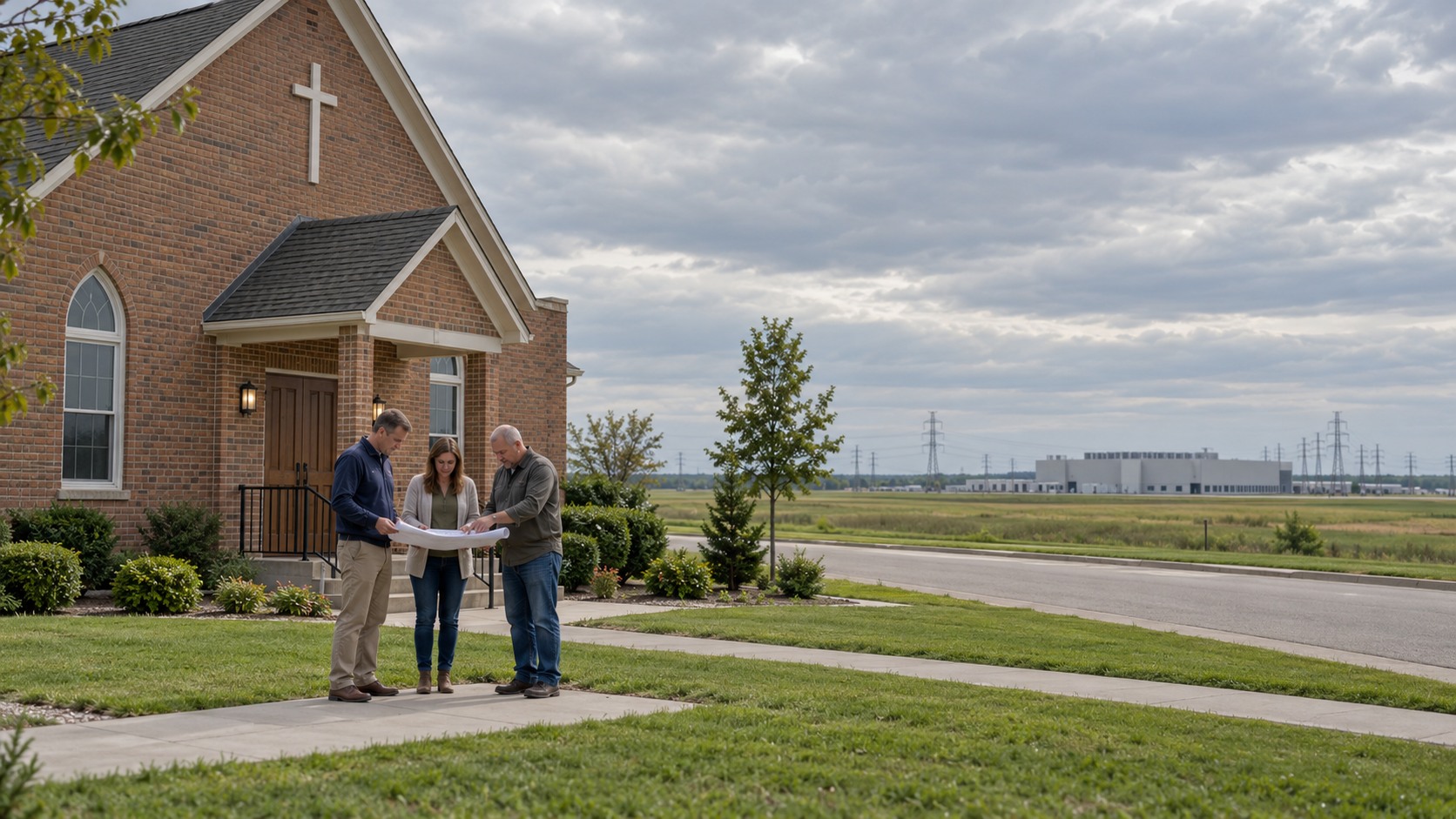
Kansas Interfaith Action is bringing the debate over data-center development into a Wichita church on Sunday, October 4. Its scheduled forum at Riverside Christian Church asks whether safeguards can make large computing facilities acceptable to the communities around them, as Sedgwick County continues work on dedicated zoning rules.
The organizer lists the event for 2 p.m. at 1001 North Litchfield, in cooperation with the Kansas WEALTH Coalition, whose name stands for Water, Energy, Air, Land, Transportation and Health. Its stated concerns include resource use, neighborhood conditions and corporate accountability. Source: kansasinterfaithaction.org
For congregations following AI's expansion, the useful question is concrete: which public decisions govern the infrastructure, and what evidence can residents examine before commitments are made? A discussion of benefits or dangers becomes more useful when it identifies who has authority to act.
An advocacy organization with a declared position
KIFA is not presenting itself as a neutral industry trade group. Its event notice says the organization has joined calls for a pause on new construction while concerns are addressed. Readers should understand that position when assessing the gathering's framing. A forum can inform public participation without its organizers' preferred policy becoming the only reasonable religious response.
KIFA describes itself as a statewide, multifaith advocacy organization. Its published relationships include Lutheran, United Church of Christ, Episcopal and United Methodist bodies. An established faith organization is helping residents examine a public-policy choice. Its position should not be attributed to every member of those traditions. Source: kansasinterfaithaction.org
Data centers serve a range of digital activities. KMUW's earlier local reporting, republished by High Plains Public Radio, places AI processing within that wider infrastructure debate. The Wichita forum is about data centers generally, not exclusively facilities running AI. Source: hppr.org
What the county is deciding
Wichita's planning department says the current unified zoning code lacks a specific data-center definition, with applications assessed through existing categories according to their characteristics. The department's timeline records a September 2 extension of Sedgwick County's interim development controls through December 24, 2026. That is an existing pause in a rule-making process, not a newly announced October ban. Source: wichita.gov
KWCH independently reported the September vote and the need for more time to finish zoning work. Its report said the county then had no active data-center applications, although companies had expressed interest. That dated account should not be stretched into a claim that no proposal could have emerged since. Source: kwch.com
The September 24 planning presentation is more precise about its own scope: this regulatory exercise is not considering a specific application. It lists October 8 and October 22 committee sessions and a November 12 public hearing in its proposed schedule. Residents should check current official notices before attending; a planning slide is not a guarantee that a future meeting will proceed unchanged. Source: wichita.gov
Electricity protections already exist
A fair discussion must also acknowledge safeguards already adopted. On November 6, 2025, the Kansas Corporation Commission approved an Evergy large-load electricity rate plan for new facilities forecast to use at least 75 megawatts, and specified expansions of that size. The commission describes it as a way to serve major users while protecting other customers from unfairly allocated costs. Source: kcc.ks.gov
The announced terms include a minimum twelve-year contract, an optional ramp-up period of up to five years, and a minimum monthly bill based on 80 percent of contracted demand. Customers must provide collateral equal to two years of minimum bills; early termination carries an exit charge. The commission also says upgrades needed solely for the new customer are assigned to that customer.
These provisions address electricity-cost allocation. Their existence does not resolve every land-use or water question, nor does an official statement of purpose prove how every future project will perform. Conversely, it would be misleading to describe Evergy’s existing Kansas customers as having no protections against costs from new large loads.
Turn broad concerns into inspectable requirements
The September 24 proposed zoning text shows why a local discussion can add something beyond arguments about electricity prices. For projects requiring conditional-use approval, the proposal calls for a narrative identifying applicants and roles, planned power demand, construction phases and equipment details relevant to impacts. It seeks equipment details for both the initial phase and full build-out, including cooling, emissions-control equipment and sound data. These are proposed requirements, not adopted rules. Source: wichita.gov
For a congregation preparing to participate, that distinction suggests a practical reading exercise: identify what a document would require, who would supply the information and who would check it. A promise to be a good neighbor needs a way for neighbors to examine what it means.
Because the proposal already calls for initial-phase and full-build-out equipment details, residents could ask how later changes would be disclosed, checked and reviewed. That is a suggested accountability question, not an allegation that a developer has concealed expansion. Asking a precise question leaves room for a documented answer and for evidence to change an initial judgment.
Christian perspective: stewardship needs particulars
Genesis 2:15 places human work alongside care for the garden. In its creation setting, the passage describes a responsibility entrusted to humanity; it does not prescribe a modern zoning category or prove that a particular cooling system is harmful. A Christian application to infrastructure should therefore encourage careful examination of land and resources, rather than use Scripture to skip the technical evidence. Genesis 2:15 (NIV)
That responsibility also includes truthful participation. A church can listen to residents worried about costs, workers hoping for opportunities and officials trying to write enforceable rules without pretending those interests always align. Compassion becomes more practical when people can identify the affected neighbors and the decision that could protect or burden them.
The immediate opportunity in Wichita is to connect moral concern with a visible public process. The October 4 forum can help people prepare questions; its value will be clearer as those questions meet actual records and decisions. For readers elsewhere, the transferable lesson is to follow the local rules as closely as the announcement of a new computing facility.