
FAITH. TECHNOLOGY. PUBLIC ACCOUNTABILITY.
Research library

News brief

AI on a pilgrimage: a new commentary asks how much of the journey to delegate

An October essay revisits a 2025 walking account. Its strongest practical question concerns attention and judgment, rather than proof that AI improves spiritual experience.

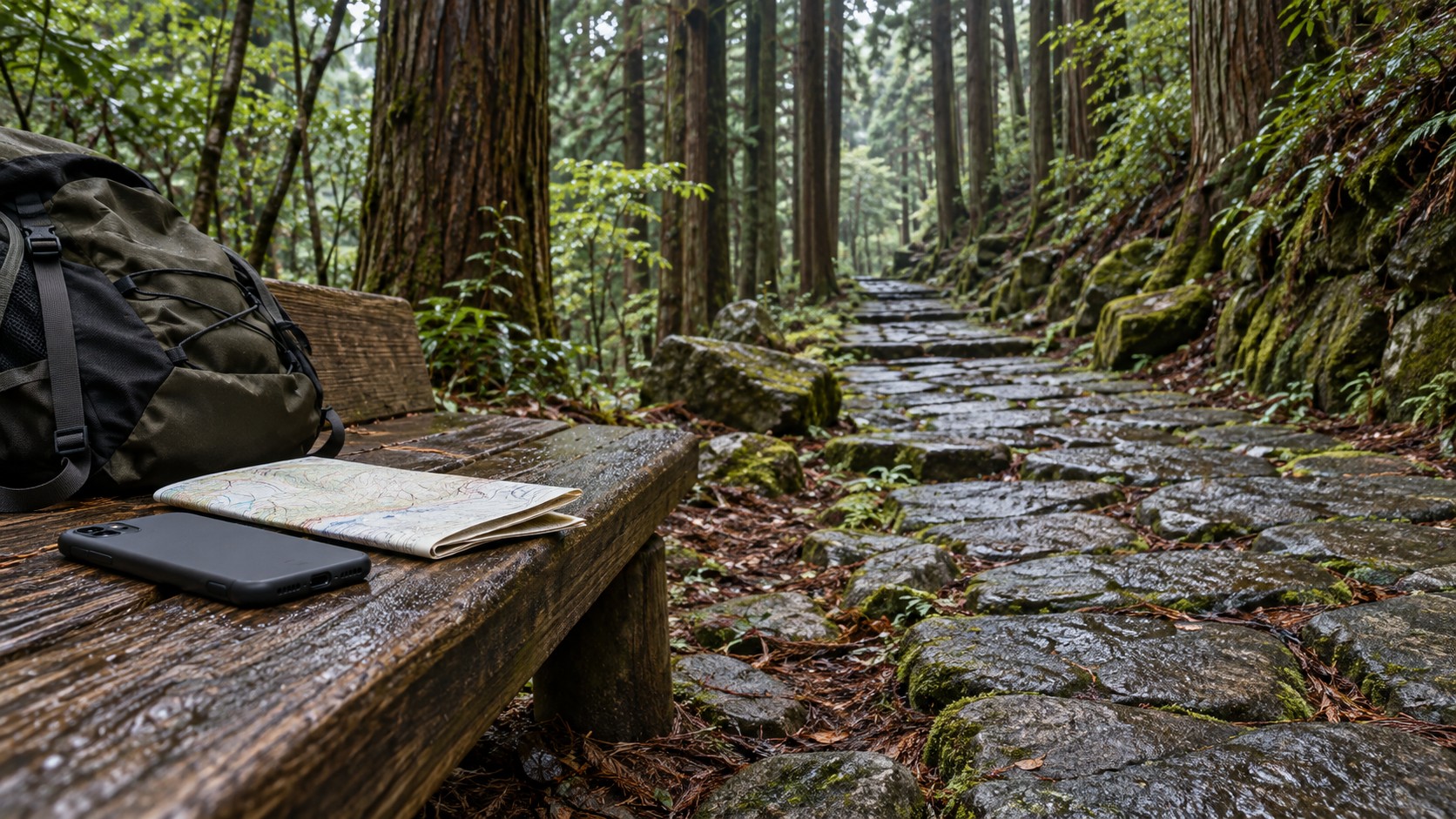
A face-down smartphone, folded map and backpack rest on a wooden bench beside a stone path through a forest.
Editorial illustration
AI Faith Monitor

Published 2026-10-12 · 2 min read · AI-assisted reporting

University republication October 9, 2026; underlying field reflection published 2025 · Source checked 2026-10-13

An interpretation of an older journey

An essay by Binghamton University scholar Shay Rabineau, republished by the university on October 9, considers AI companions through pilgrimage’s longer relationship with technology. His argument places machine-assisted travel alongside earlier changes brought by guidebooks and transport, while asking travelers to decide how much influence to give their devices. It is commentary about religious practice, not a new experiment establishing spiritual benefits. Source: binghamton.edu

Rabineau discusses Wayne E. Arnold and John A. Shultz’s earlier walk on Japan’s Kumano Kodō Iseji route. The abstract of their 2025 invited paper describes an early-2025 journey with a customized AI companion and their positive experience of translation, historical information and companionship. The authors call their account a field reflection. Its accessible abstract does not establish translation accuracy, comparative spiritual outcomes or what other pilgrims would experience. The full paper was unavailable for this brief. Source: arrow.tudublin.ie

That access limit also prevents an assessment here of the companion’s configuration, safeguards or handling of mistakes. The favorable description should therefore remain attributed to the walkers, rather than become a recommendation for a particular product.

Information is one part of a sacred journey

The local Tanabe City Kumano Tourism Bureau describes walking as integral to Kumano pilgrimage and identifies Iseji as the route between Ise-jingu Shrine and the Kumano Sanzan. That context matters: a route has religious meaning and local custodians, not simply locations for a chatbot to explain. The bureau’s information is background, not an endorsement of AI assistance. Source: tb-kumano.jp

For a pilgrimage organizer, our practical suggestion is to separate logistical assistance from religious interpretation. A hypothetical group could use a translation suggestion to formulate a question for a local guide, while checking the meaning rather than treating fluent output as authoritative. It could also agree when phones should be put away. These are proposed choices, not findings from the two walkers’ experience.

A Christian question about attention

For Christian readers, Luke 24:13–35 recounts the risen Jesus walking with two disciples, explaining Scripture and being recognized at a shared table. Its subject is recognition of Christ after the resurrection, not the design of travel software. A limited application is to preserve space for listening, shared interpretation and hospitality during a journey. It does not justify identifying an AI companion with Jesus or treating another tradition’s pilgrimage as interchangeable with Christian practice. Luke 24:13-35 (NIV)

Sources & method

Shay Rabineau: commentary on AI and pilgrimage, republished by Binghamton University

What this article establishes

Brief on a dated scholarly commentary and older field reflection. Full Binghamton republication and tourism-bureau background read; underlying paper abstract only, PDF returned403. No tool testing, interviews, accuracy measures or demonstrated spiritual effects. Produced with AI assistance under human editorial direction. The editor shapes the coverage and takes responsibility for the final published content. AI-generated illustration of an imagined forest walking trail and a traveler’s belongings; it does not depict the researchers or their journey.

How we use AI · Evidence standards

Related reading

A closed document folder and key sit on a wooden desk, with a closed laptop and an empty chair in a church office.
Editorial illustration

Report / Faith & religious life

Swiss churches’ AI guidelines draw a firm boundary around pastoral confidences

Five Christian bodies have issued shared guidance. A close comparison shows why checking a tool’s data terms and deciding what never enters it are separate tasks.

Published 2026-10-12 · Joint announcement October 12, 2026; linked German text marked September 3; discussion scheduled October 20


A face-down phone and notebook sit on a low shelf beside a prayer rug in a sunlit mosque interior.
Editorial illustration

News brief / Faith & religious life

Elshinawy sermon puts purpose before speed in AI use

A QIBLA framework connects Muslim obligations with practical choices about technology.

Published 2026-10-12 · Video published October 10, 2026; republished October 12; delivery date unconfirmed