A proposal, not yet an adopted church policy
A resolution on the Diocese of California’s convention website proposes using church shareholdings to address the impacts of AI data centers. The page, last updated September 4, identifies its status as reviewed by the Committee on Resolutions. That is the status supported by the inspected record; it should not be reported as a final convention decision.
The proposed text seeks a coordinated shareholder strategy through Episcopal Church bodies, working with the Interfaith Center on Corporate Responsibility. It identifies water, energy and emissions as concerns and calls for identifying relevant companies in the church’s portfolio. These are proposed actions, not evidence that the portfolio review or corporate engagement has already occurred. The original text and status are available together: Source: diocalconvention.org
For religious readers, the significance is practical. Debate about AI often begins with what a chatbot says or whether a sermon used generated text. This proposal directs attention to the physical infrastructure behind those services and to the responsibilities attached to owning shares. A congregation may encounter the AI economy through its investments as well as its software subscriptions.
What a stewardship claim needs to show
A useful public conversation begins by separating a request for information from a finding of harm. Asking a company to explain its water use is not the same as demonstrating that a particular facility has damaged a watershed. Supporting scrutiny does not require pretending the answer is already known. Conversely, a company’s general sustainability commitment cannot answer every question about a specific site.
The relevant questions include where water comes from, how demand changes during hot periods, who pays for new infrastructure, and which public bodies oversee the arrangement. Answers should come from local records and clearly attributed company information. A national estimate can supply context, but it cannot stand in for an assessment of one community’s conditions.
There is a reasonable case that new infrastructure can support useful services and public investment. There is also a reasonable demand that its costs and benefits be examined together. The ethical task is to make those arguments concrete enough to test. A church should avoid both an automatic blessing of technological expansion and an automatic conclusion that every project is harmful.
A company announcement illustrates the distinction
In a separate September 20 announcement, Amazon said it had committed nearly $400 million to water-infrastructure projects in Eastern Oregon. It described arrangements under which public entities plan, own and operate the infrastructure, while Amazon provides funding. That is Amazon’s account of its commitments, not an independent assessment presented by this publication. It is not a response to the diocesan resolution. Source: Source: press.aboutamazon.com
The example shows why a headline number needs a second layer of explanation. A reader needs to know what has been committed, what has been completed, how public needs are defined and whether promised benefits reach the people described. Funding, construction and demonstrated improvement are different stages. Each can be documented without treating one as proof of the next.
Church leaders can apply the same discipline when reading an advocacy statement. Identify the claim, inspect the evidence and ask whether the proposed action addresses it. A persuasive moral vocabulary should sharpen the search for facts, not replace it.
Christian perspective: creation care is also care for neighbors
Genesis 2:15 presents human responsibility through tending and keeping the garden. Applied as Christian reflection, this challenges a view of land and water as merely inputs to production. It does not determine a technical water budget or settle a planning application. It supplies a reason to examine how human activity sustains or damages the conditions on which others depend. Read Genesis 2:15: Genesis 2:15 (NIV)
Mark 12:31 brings the neighbor into that evaluation. The people affected by an institutional decision may include households outside the congregation, workers, future residents and communities with little access to decision-makers. Concern for them should shape the questions asked before a church lends its money, reputation or public support. Read Mark 12:31: Mark 12:31 (NIV)
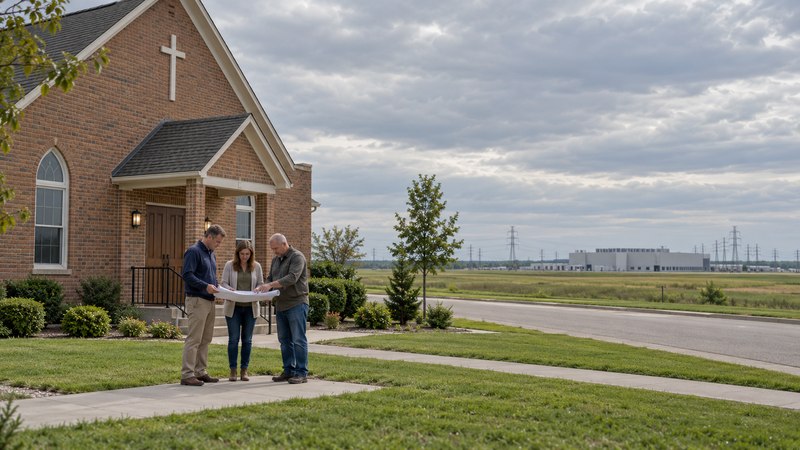
Consider a hypothetical church offered a financial benefit associated with a nearby industrial project. It would be inadequate to judge the offer only by what it pays for inside the building. Leaders would also need to hear residents, inspect the terms and ask what costs are carried elsewhere. This is an ethical illustration, not an allegation about the California proposal or an actual congregation.
Christian stewardship also requires truthful speech. A church weakens its witness when it exaggerates evidence to advance an otherwise serious concern. Fair attribution, attention to uncertainty and willingness to acknowledge benefits are part of moral credibility. They allow disagreement to focus on the actual decision rather than on competing caricatures.
From a resolution to an accountable decision
For a church investment committee, the immediate lesson is to connect stated values with an intelligible process. Establish which holdings are relevant, which claims need investigation and who is responsible for presenting the findings. Seek qualified advice about the available routes; this report does not recommend particular investments or predict the effect of shareholder action.
For a pastor or educator, the proposal offers a discussion grounded in an actual document. Ask participants to distinguish its concern, its requested action and its recorded status. Then compare the evidence needed for a moral judgment with the evidence needed for a factual allegation. That exercise helps a community participate seriously without confusing advocacy with a completed investigation.
The published resolution is a useful starting point because it makes an institutional request visible. Whether it becomes adopted policy, produces engagement or changes practice requires additional records. Its present contribution is to put a concrete question before church institutions: how should responsibility for neighbors extend to the infrastructure in which they invest?