A development agreement with a geographic boundary
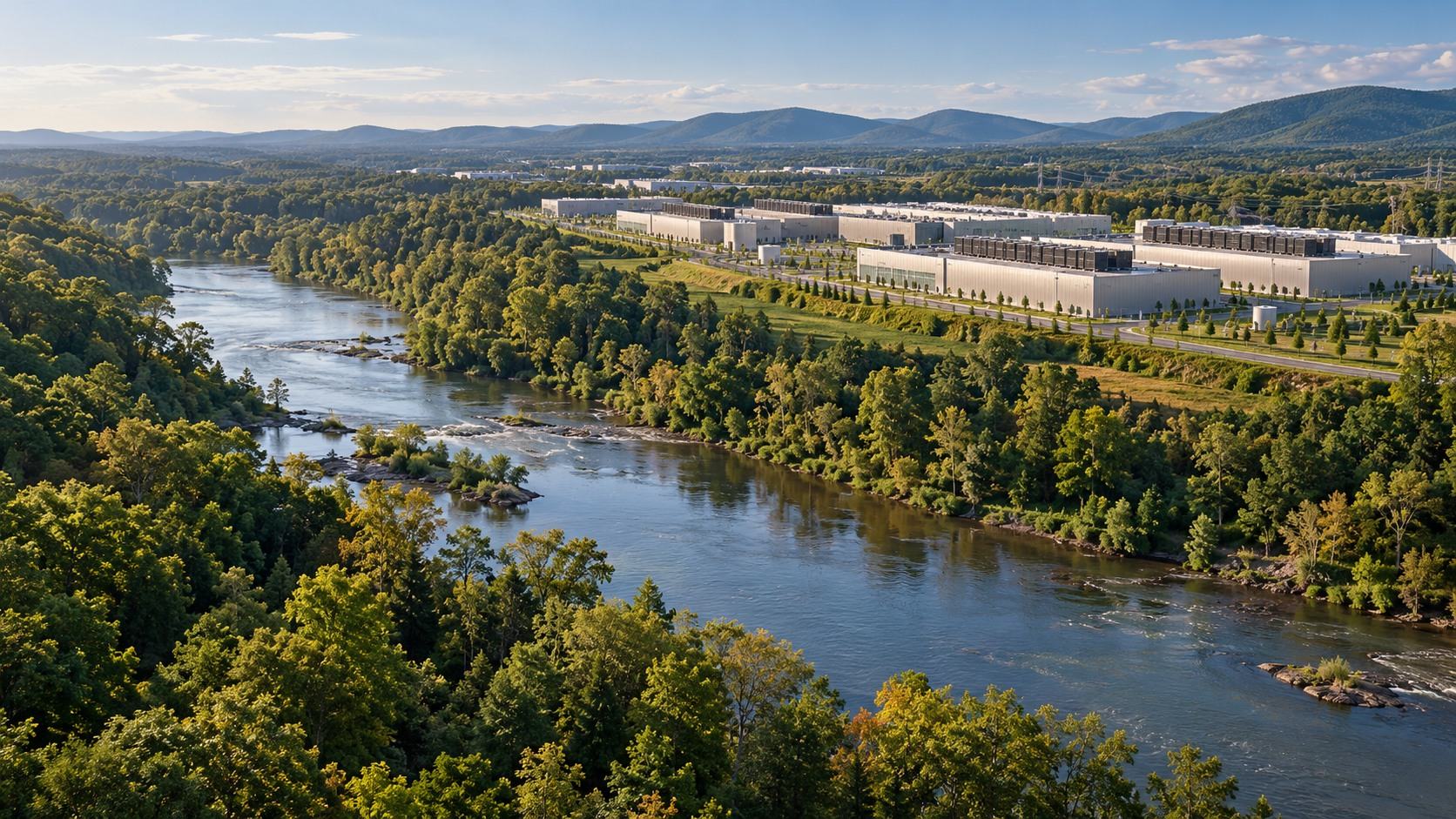
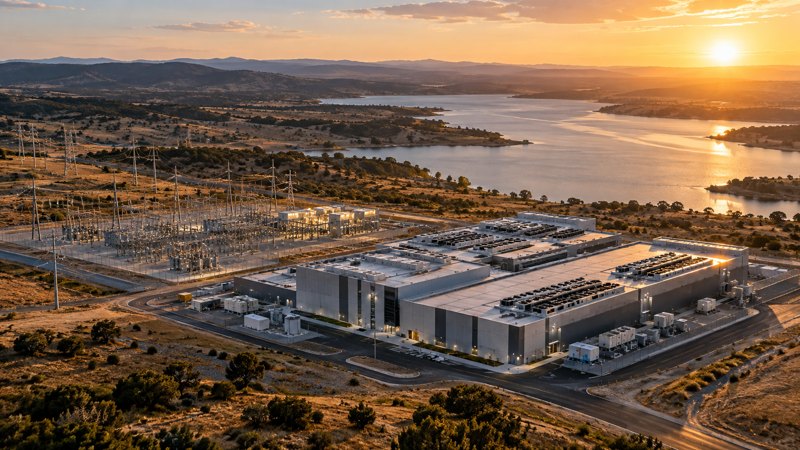
King George County, Virginia, and Amazon Web Services announced an agreement on September 29 covering a planned $6 billion data-center campus. The county says it recognizes AWS’s vested development rights at the former Birchwood coal-power property and nearby industrial-zoned land. In return, according to the announcement, AWS made a binding commitment not to put data-center buildings on land adjacent to the Rappahannock River.
The announcement also identifies a $10 million contribution to the county’s new Career and Technical Education school and anticipates more than 100 jobs. These are commitments and expectations reported by the county; the release does not show a completed campus, an operating payroll or realized tax receipts. It describes computing infrastructure supporting digital services generally, without specifying what share would serve AI workloads. Source: kinggeorgecountyva.gov
The distinction matters to readers following AI’s physical expansion. A campus announcement can establish a proposed investment and negotiated limits while leaving its eventual size, operating demands and local benefits to be demonstrated. The public summary provides a starting point for scrutiny. The full agreement would be needed to assess its detailed obligations and enforcement provisions.
The earlier water decision remains relevant
Water supply was already an issue before this week’s agreement. In an August 26 report, Virginia Mercury said AWS was withdrawing an application to renew permission for annual withdrawals of up to 6.4 million gallons from the Potomac aquifer. The proposed water was for employee needs, grounds management and other purposes, rather than server cooling. AWS told the publication it would pursue alternative supplies following advice from Virginia’s environmental regulator.
The report also recorded state Senator Richard Stuart’s opposition and his concern about protecting drinking-water supplies. It noted that the requested volume was far below the largest industrial withdrawal permits. That comparison is useful, but it cannot settle whether another withdrawal is sustainable in a particular aquifer. Source: virginiamercury.com
The September agreement’s restriction on the location of buildings should therefore be read separately from the older water-supply issue. Keeping structures away from a river does not, by itself, identify the campus’s eventual water source or establish how much water it will require.
Regional science resists a simple shortage story
A 2026 U.S. Geological Survey study provides a more careful account of the regional groundwater system. Its model finds that substantially reduced pumping after 2010 allowed some recovery of groundwater storage across much of Virginia’s confined aquifer system. It also finds continuing storage declines elsewhere in the modeled area. The report describes groundwater flows across regional and state boundaries, rather than a self-contained underground reservoir beneath each county. Source: pubs.usgs.gov
Those findings argue against two easy claims: that the aquifer is uniformly recovering enough to accommodate any project, or that every new facility necessarily causes a measurable local shortage. A regional model is background evidence. It is not a site-specific determination of the AWS proposal’s effects.
For residents, the important next evidence would identify the source, permitted volume, seasonal demand and competing uses of the water actually proposed. A claim of efficiency becomes more informative when it is connected to those local conditions and a specified operating design.
The economic case has real strengths and limits
Virginia’s Joint Legislative Audit and Review Commission found in its December 2024 data-center study that the industry brings substantial capital investment and can generate significant local tax revenue. Most statewide economic benefits in its analysis came during construction, while operating facilities employed comparatively fewer people. That helps explain why a local government might welcome the investment even when permanent job totals appear modest beside the capital figure.
The same study found large differences in water needs between facilities and emphasized the importance of location and cooling systems. On electricity, it distinguished whether customers paid their allocated costs under existing rates from the possibility that rapid demand growth could increase wider system costs. These are different questions. Source: jlarc.virginia.gov
Neither finding supplies a forecast for King George. A responsible local balance sheet would distinguish construction activity, continuing tax receipts, infrastructure commitments and long-term costs. The school contribution is a visible benefit; readers still need the rest of that ledger to understand the agreement as a whole.
What accountability would look like locally
The most useful follow-through would make the agreement’s terms accessible and identify who checks them. Which parcels fall within the riverfront restriction? When does the school contribution become due? Which approvals remain, and where can residents find changes to the proposed water and power arrangements? These are questions raised by the public summary, not claims that a condition has been breached.
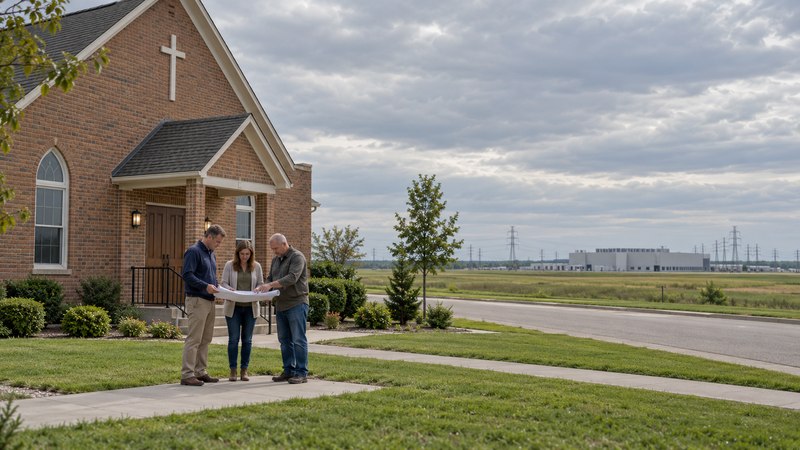
For local churches and civic groups, following those documents is more constructive than choosing between blanket enthusiasm and blanket opposition. Members may include construction workers, teachers, nearby households and people hoping for a stronger tax base. Their interests can overlap without being identical. A public process should let each examine the same evidence and distinguish a promised benefit from a delivered one.
Christian perspective: work and care belong together
Genesis 2:15 places the human being in the garden with responsibilities both to cultivate it and to care for it. Within the creation narrative, useful work and responsibility for a received world are held together. The passage does not prescribe a modern zoning decision, but it offers a Christian reason to examine both economic contribution and environmental care. Genesis 2:15 (NIV)
Applied here, stewardship would ask whether the arrangement supports livelihoods while taking the needs of the place and its neighbors seriously. It should welcome verifiable benefits and seek equally verifiable limits. The moral question cannot be answered by the size of a donation alone, or by treating technological development as inherently suspect. It requires continuing attention to what is built, what is used and who bears the consequences.