
FAITH. TECHNOLOGY. PUBLIC ACCOUNTABILITY.
Research library

News brief

Leo XIV brings AI job-risk warning to Argentina’s labour and business leaders

The November 9 address connects automation with work and representation.

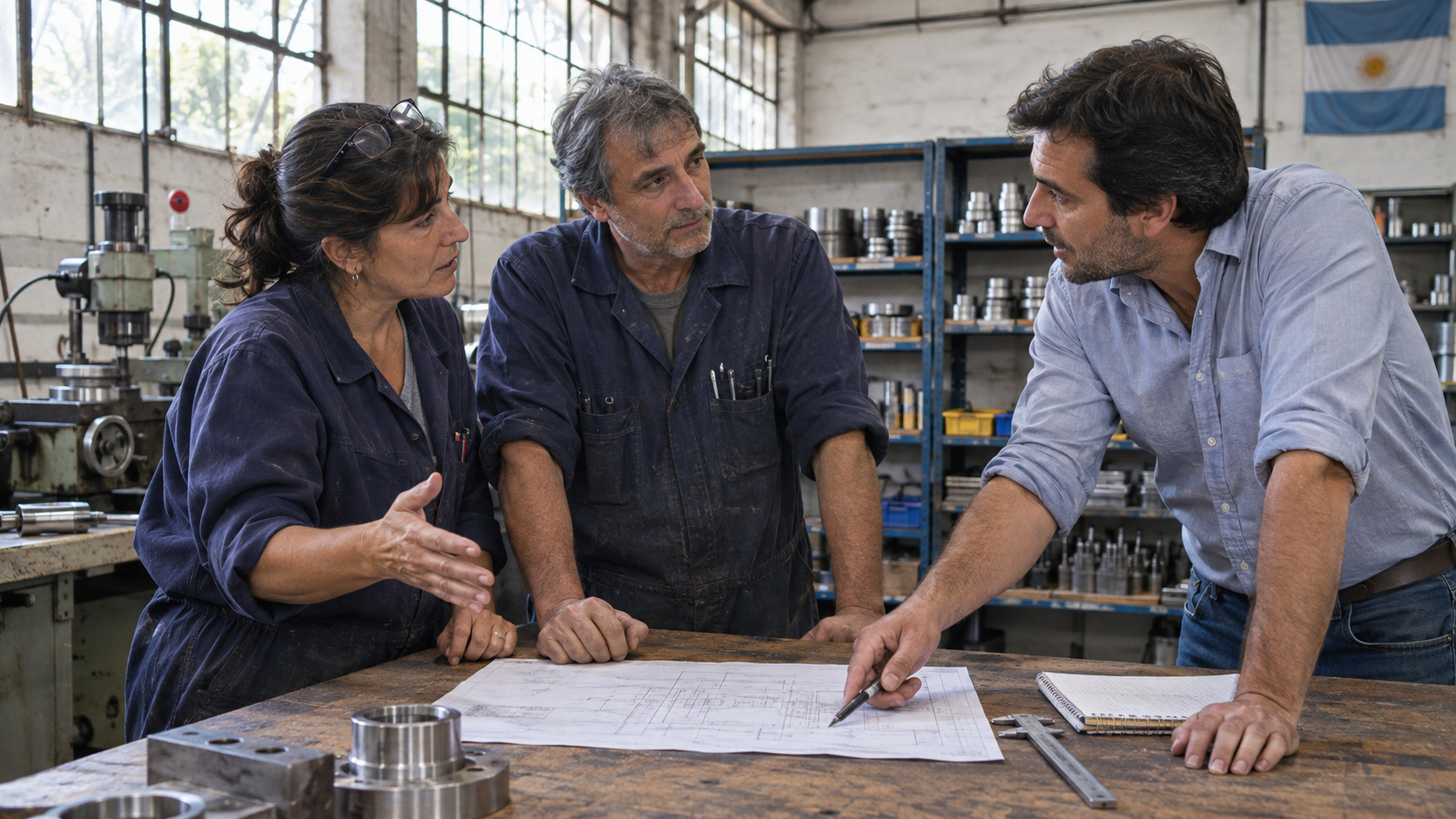
AI-generated illustration of three adults discussing a drawing at a workbench in an imagined workshop with an Argentine flag.
Editorial illustration
AI Faith Monitor

Published 2026-11-10 · 2 min read · AI-assisted reporting

Address November 9, 2026; Vatican text and AP report checked November 10 · Source checked 2026-11-10

An address to workers and employers

Pope Leo XIV warned of risks to employment from AI and unregulated automation during a November 9 address to Argentina’s work community in Buenos Aires. Speaking at the Catholic University of Argentina, he urged public authorities to protect workers and put technological change under ethical scrutiny. Source: vatican.va

The audience made this more than another statement addressed to technology specialists. Associated Press reported that the gathering brought together union leaders, industrialists and informal workers, including waste pickers. Its account described an unusually broad encounter between business and labour. Source: wsvn.com

Leo’s AI warning appeared near the end of a longer treatment of Catholic social teaching. He defended workers’ associations as vehicles for solidarity while urging them to include precarious workers and people outside formal employment. He also recognised employers’ risk-taking and called for investment that respects work and environmental sustainability. Source: vatican.va

Who participates when work changes?

For Christian employers and ministry leaders, the useful question is who participates when work is redesigned. An organisation can consult its most confident technology users and still miss those whose tasks are changing most. A discussion about adoption should make room for the administrator expected to check automated output, the worker whose duties are being reassigned and the person who cannot simply move into a newly advertised role. That is an editorial application of the address, not a staffing plan issued by the pope.

A practical starting point would be to describe the proposed change in ordinary language before buying a tool: which tasks would disappear, which would move to someone else and what new checking would be required? Ask the affected workers to correct that description. Their account of the job may include responsibilities that never appeared in the purchasing proposal.

Church employers can then distinguish a trial from a settled staffing decision. Give workers a route to raise unexpected burdens and make clear who can change the plan. Include people on short contracts and outsourced staff where their work is affected, rather than assuming that a meeting with permanent employees represents everyone. These are questions for local deliberation, not claims about arrangements at the Buenos Aires gathering.

What remains to be established

The speech is not a job-loss study or a new regulation. Whether it changes workplace decisions remains an open reporting question.

Sources & method

Vatican: November 9 address to the work community

What this article establishes

Based on the Vatican address and AP reporting read through its WSVN syndication. No attendance, interviews, labour-market measurement or new regulation established. Workplace questions are original editorial application. Produced with AI assistance under human editorial direction. The editor shapes the coverage and takes responsibility for the final published content. AI-generated imagined discussion about work in an Argentine workshop; not the pope, his audience, the university venue or an actual workplace visit.

How we use AI · Evidence standards

Related reading

Imagined publishing workspace with music sheets, printed artwork, a closed laptop and pencil, with a small wooden cross on a bookshelf.
Editorial illustration

News brief / Work & creation

Benanti asks who benefits when AI trains on Australian creative work

The Franciscan ethicist puts creators and local benefit at the center of a debate whose consultation options remain distinct from policy decisions.

Published 2026-10-15 · ABC interview published October 14, 2026; interview date unspecified
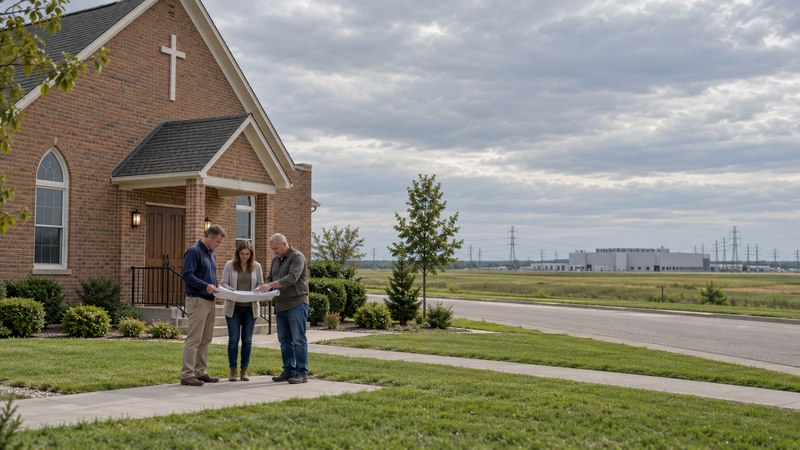
AI-generated conceptual illustration of three adults examining a planning sheet outside an imagined church, with computing infrastructure in the distance; not the Wichita venue or an actual project.
Editorial illustration

Report / Work & creation

Wichita faith forum puts data-center safeguards on the community agenda

A planned church gathering brings stewardship into a live zoning debate. Existing electricity protections and proposed local requirements show why the details matter.

Published 2026-10-03 · Forum scheduled October 4, 2026; planning documents September 24; electricity tariff approved November 6, 2025

A conceptual wooded river corridor with an industrial campus in the distance; not the King George site.
Editorial illustration

Report / Work & creation

King George and AWS reach data-center deal with riverfront limits

A newly announced agreement combines a planned $6 billion campus with a school contribution and a restriction on river-adjacent buildings. Its public value will depend on the details that follow.

Published 2026-09-30 · Source 2026-09-29